

E-Bike Laws by State
Have you ever found yourself daydreaming about cruising through the city on an e-bike, wind in your hair, only to suddenly wonder, “What are the rules here?” It’s a wild thought, isn’t it? Just picture this: you’re ready to hit the road, but then you remember that in some states, you need to strap on a helmet before you even roll out of your driveway. In others, you might have to go through the hassle of registering your e-bike, just like you would with a car.
Imagine planning a weekend trip to a neighboring state, excited about exploring new trails. But then you realize that the rules are completely different there. It’s essential to know what’s required in your area so you can enjoy your ride without any surprises.
So, what’s the scoop on where you can ride and what you need to do? Let’s take a closer look at the details, because understanding these laws is the key to a smooth and enjoyable ride!
Overview of E-Bike Classes
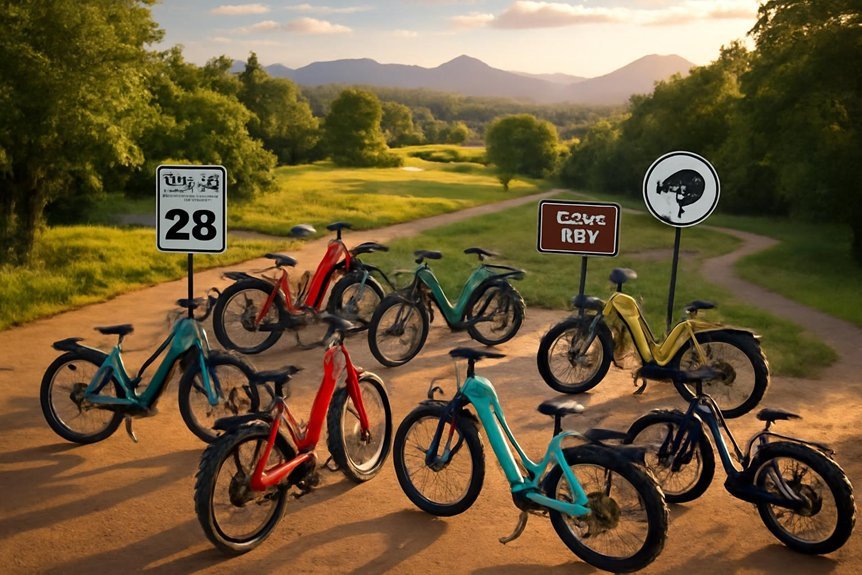
When it comes to e-bikes, understanding the different classes can really help you choose the right ride for your needs.
There are three main classes of e-bikes, each with unique features.
Class 1 e-bikes have a pedal-assist system that kicks in while you pedal, stopping at 20 mph.
Class 2 e-bikes come with a throttle, allowing you to ride without pedaling, also stopping at 20 mph.
Finally, Class 3 e-bikes offer pedal assistance up to 28 mph, but typically require you to be at least 16 to ride.
Knowing these differences can make your decision easier, so you can find the perfect e-bike that matches your style, whether you’re cruising around town or tackling some steep hills.
State-by-State Breakdown of E-Bike Regulations
As you immerse yourself in the world of e-bikes, it’s important to know that different states have their own rules about how you can ride them.
For example, California allows e-bikes on bike paths and requires a helmet for riders under 18. In contrast, New York has strict regulations, including requiring registration for e-bikes.
Meanwhile, Texas lets you ride e-bikes almost anywhere traditional bikes go. Each state has its own vibe when it comes to laws, so it’s essential to check local regulations before hitting the road.
Understanding these rules not only keeps you safe but also guarantees you’re riding legally.
E-Bike Speed Limits and Restrictions

While you might think all e-bikes zoom along at lightning speed, that’s not quite the case. Each state has its own rules about how fast you can go on an e-bike.
Generally, e-bikes have power limits that restrict them to a maximum speed of 20 to 28 miles per hour, depending on the class of the bike. For instance, Class 1 e-bikes, which rely on pedaling, usually cap out at 20 mph.
It’s important to know these limits because riding too fast can lead to fines or even accidents. So, as you cruise around, keep an eye on your speed and follow local regulations.
After all, staying safe is way cooler than getting a ticket!
Where You Can Ride: E-Bike Access
E-bikes can take you on some amazing adventures, but knowing where you can ride them is just as important as knowing how fast they can go.
In many places, you can hit the trails, bike paths, and even some roads, but rules vary from state to state. Some states treat e-bikes just like regular bicycles, while others have specific areas where you can and can’t ride.
Always look for signs that indicate e-bike access. Parks and nature reserves may also have their own rules, so it’s good to check ahead.
Helmet Laws and Safety Requirements
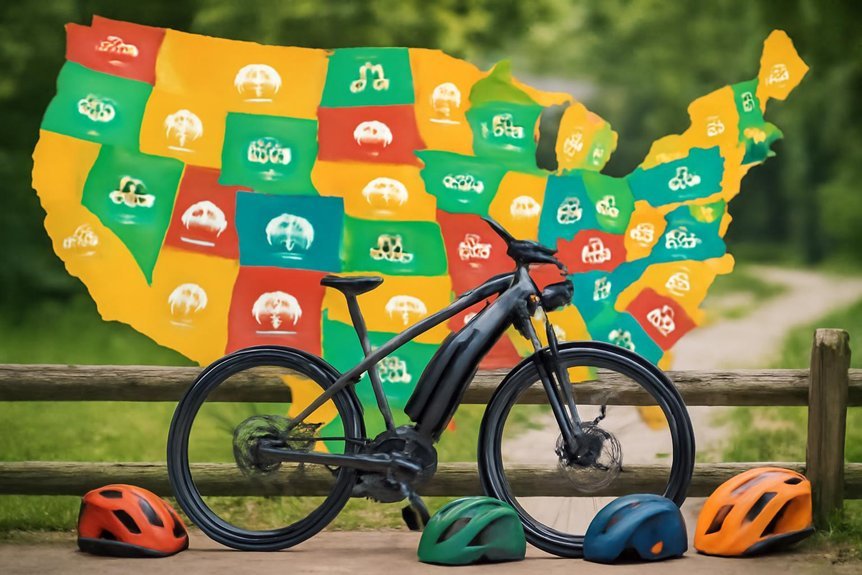
Hitting the trails or cruising down the road on your e-bike is a blast, but safety should always be top of mind.
One of the best ways to protect yourself is by wearing a helmet. Many states require riders, especially those under 18, to wear one while riding. Even if it’s not mandatory where you live, it’s a smart choice.
Make sure your helmet fits snugly and meets safety standards, so you’re ready for any bumps along the way. Some places also encourage wearing reflective gear or bright colors to make you more visible to drivers.
Registration and Licensing for E-Bikes
Before you hit the road on your e-bike, it’s important to know the rules about registration and licensing in your state.
Some states require you to register your e-bike just like a car, while others don’t. If registration is needed, you might’ve to pay a small fee and display a license plate.
Licensing requirements can vary too—some states don’t require a license at all, while others may ask for a special e-bike permit.
Always check the local laws to avoid surprises! Keeping your e-bike legal isn’t just smart; it also keeps you safe.
FAQ
Are Electric Bicycles Allowed on All Bike Paths?
FAQs About Electric Bicycles on Bike Paths
1. Are electric bicycles allowed on all bike paths?
No, electric bicycles are not permitted on all bike paths. Regulations vary by location, so it’s essential to check specific rules.
2. How can I find out if e-bikes are allowed on a particular trail?
You should consult local regulations or trail signage to determine if e-bikes are permitted on that specific path.
3. What types of bike paths usually allow e-bikes?
Some multi-use trails and urban bike paths may allow electric bicycles, but this can differ widely based on local laws.
4. Are there any restrictions on the types of e-bikes allowed?
Yes, some locations may have restrictions based on the class of electric bicycle. Always verify what types are permissible.
5. Do e-bikes require a special permit to use certain trails?
In some areas, e-bikes may require a permit to access specific trails. Check with local authorities for details.
6. Can I ride an e-bike on mountain bike trails?
Many mountain bike trails have restrictions on e-bikes. Check the specific rules for the trail you plan to ride.
7. What should I do if I’m unsure about the rules for e-bikes on a trail?
If you’re uncertain, it’s best to contact local authorities or the managing organization of the trail for clarification.
8. Are there any penalties for riding an e-bike on trails where they are not allowed?
Yes, riding an e-bike on restricted trails can lead to fines or removal from the area. Always follow local regulations.
9. Is it possible to appeal a local e-bike regulation?
Yes, some jurisdictions may allow for appeals or public comments regarding e-bike regulations. Check with local governance for procedures.
10. Do e-bike regulations change frequently?
Yes, e-bike regulations can change as communities adapt to increasing use. Stay updated through local news or government websites.
11. Where can I find resources on e-bike regulations in my area?
Local government websites, cycling organizations, or trail management pages often provide the most accurate and updated information on e-bike regulations.
Can I Convert a Regular Bike Into an E-Bike?
1. Can any regular bike be converted into an e-bike?
Most regular bikes can be converted into e-bikes, but compatibility with the conversion kit is essential. Check your bike’s frame and components to ensure they can accommodate the kit.
2. What components are included in an e-bike conversion kit?
A typical e-bike conversion kit includes a motor, battery, controller, and necessary wiring. Some kits may also come with additional components like a throttle or display panel.
3. How do I choose the right conversion kit for my bike?
Consider your bike type, desired speed, range, and terrain when selecting a conversion kit. Additionally, ensure the motor’s power matches your riding needs.
4. Is it difficult to install an e-bike conversion kit?
Installation difficulty varies by kit and bike type, but most kits come with detailed instructions. Basic mechanical skills can help, but you can also seek professional assistance if needed.
5. What tools will I need for the installation?
Common tools required for installation include wrenches, screwdrivers, and possibly a torque wrench. Refer to the conversion kit’s manual for a specific list of necessary tools.
6. How long does the installation process take?
The installation process can take anywhere from a couple of hours to a full day, depending on your experience and the complexity of the kit. Take your time to ensure everything is installed correctly.
7. Will converting my bike void its warranty?
Converting your bike may void its warranty, particularly if modifications affect the frame or components. Check with the manufacturer for their warranty policies before proceeding.
8. What is the average cost of an e-bike conversion kit?
The cost of e-bike conversion kits typically ranges from $300 to $1,500, depending on the motor power and battery capacity. Higher-end kits may offer better performance and features.
9. How do I maintain my e-bike after conversion?
Regularly check the battery, motor, and wiring connections for wear or damage. Following the maintenance guidelines provided in the conversion kit manual will help ensure optimal performance.
10. Can I switch back to a regular bike after the conversion?
Yes, you can revert your e-bike back to a regular bike by removing the conversion kit components. This process is usually straightforward, but you may need to reinstall original parts if they were removed.
What Age Restrictions Exist for Riding E-Bikes?
FAQs on Age Restrictions for Riding E-Bikes
1. What is the minimum age to ride an e-bike?
The minimum age to ride an e-bike generally ranges from 14 to 16 years old, depending on the state.
2. Do age requirements for e-bikes vary by state?
Yes, age requirements for riding e-bikes can differ from one state to another, so it’s important to check local laws.
3. Can younger riders use e-bikes under supervision?
Some states may allow younger riders to use e-bikes if they are under adult supervision; however, this is not universally applicable.
4. Are there different age restrictions for different types of e-bikes?
Yes, some states categorize e-bikes into classes, and the age restrictions may vary based on the class of the e-bike.
5. How can I find the specific age restrictions in my area?
You can find specific age restrictions by consulting your state’s transportation department or local regulations regarding e-bikes.
6. What are the consequences of riding an e-bike underage?
Riding an e-bike without meeting the age requirements can lead to fines, confiscation of the e-bike, and potential legal issues.
7. Do age restrictions apply to e-bike rental services?
Yes, most e-bike rental services enforce age restrictions, typically requiring renters to be at least 18 years old.
8. Is there an age difference for riding e-bikes in urban vs. rural areas?
Age restrictions for riding e-bikes are typically consistent across urban and rural areas, but local ordinances may vary.
9. Do I need a license or permit to ride an e-bike at any age?
Most states do not require a license or permit for e-bike riders, but age restrictions still apply.
10. Can parents allow younger children to ride e-bikes legally?
While parents can permit younger children to ride e-bikes, they must still adhere to the state’s age restrictions for legal riding.
Do I Need Insurance for My E-Bike?
FAQ 1: Do I need insurance for my e-bike?
Typically, insurance is not a legal requirement for e-bikes, but it is advisable to verify local laws.
FAQ 2: What are the benefits of having e-bike insurance?
E-bike insurance can protect you from liabilities and damages in case of accidents, providing financial security.
FAQ 3: What types of e-bike insurance are available?
E-bike insurance options may include liability coverage, theft protection, and coverage for damages to the bike itself.
FAQ 4: How can I find out the insurance requirements for my e-bike?
Check your local regulations or consult with an insurance provider to understand the specific requirements in your area.
FAQ 5: What happens if I don’t have insurance and get into an accident?
Without insurance, you may be personally liable for any damages or injuries incurred during the accident, which can lead to significant financial consequences.
FAQ 6: Are there specific e-bike insurance providers?
Yes, there are specialized insurance providers that focus on e-bike coverage, as well as general auto insurance companies that offer e-bike policies.
FAQ 7: Is it more expensive to insure an e-bike compared to a regular bike?
Insurance costs can vary based on the value and type of e-bike, but generally, e-bikes may have higher premiums due to their higher speeds and potential risks.
FAQ 8: Can I add my e-bike to my homeowner’s or renter’s insurance?
Some homeowner’s or renter’s insurance policies may cover e-bikes, but it’s important to check the terms and ensure adequate coverage.
FAQ 9: What should I do if my e-bike is stolen?
If your e-bike is stolen and you have insurance, contact your provider immediately to file a claim; if you lack insurance, report the theft to local authorities.
FAQ 10: How can I lower my e-bike insurance premiums?
You can lower your premiums by maintaining a good riding record, taking safety courses, or installing anti-theft devices on your e-bike.
Are There Specific E-Bike Manufacturers Recommended for Compliance?
1. Which e-bike manufacturers are recommended for compliance?
Manufacturers like Rad Power Bikes, Trek, and Specialized are often recommended for compliance with local regulations.
2. Are all models from these manufacturers compliant?
Not all models are guaranteed to meet compliance; it’s essential to check specific features for each model.
3. Why is compliance important for e-bikes?
Compliance ensures that your e-bike meets local laws, which can affect safety, registration, and insurance requirements.
4. How can I confirm an e-bike’s compliance?
Review the manufacturer’s specifications and look for compliance indicators such as power limits and speed restrictions.
5. What features should I look for in a compliant e-bike?
Key features include maximum motor power (often 750W or less) and speed limits (usually capped at 20 mph for Class 1 and 2 e-bikes).
6. Can I modify an e-bike to meet compliance?
Modifying an e-bike can risk non-compliance; it’s best to start with a model that already meets local regulations.
7. Are there any specific models from the recommended brands?
While specific models can change, checking the latest offerings from Rad Power Bikes, Trek, and Specialized can provide compliant options.
8. What should I do if I’m unsure about compliance?
Consult local regulations or speak with a knowledgeable dealer to ensure the e-bike you choose complies with local laws.
9. Do compliance requirements vary by location?
Yes, e-bike regulations can vary significantly by region, so always check local laws before purchasing.
10. How can I stay updated on compliance regulations?
Follow local government websites or e-bike advocacy groups for the latest updates on regulations and compliance for e-bikes.
Final Thoughts
So, before you hop on your e-bike and zoom off into the sunset, take a moment to check your state’s laws. Remember, knowing the rules about where you can ride, helmet requirements, and speed limits can keep you safe and make your rides more fun. Whether you’re cruising through a park or zipping down a bike lane, being informed will help you enjoy every pedal-powered adventure without any hiccups. Happy riding!