
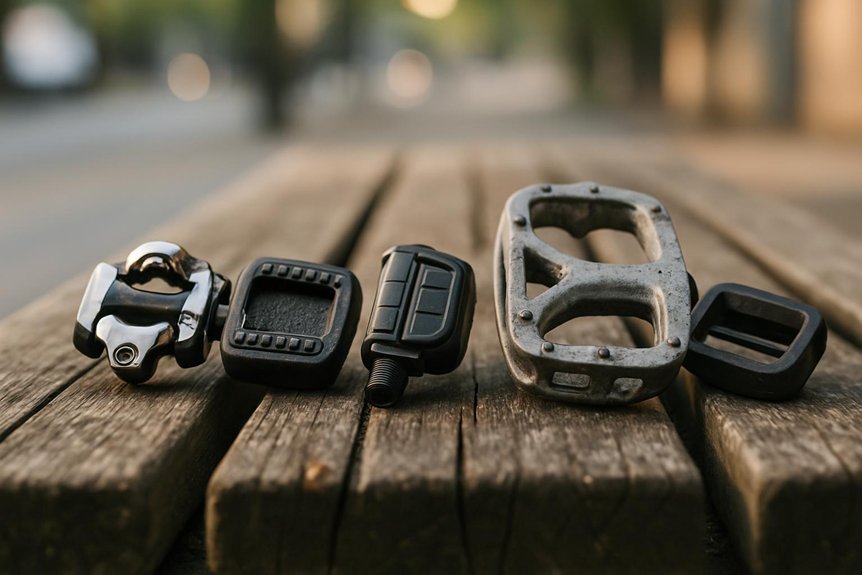
5 Best Pedals for Commuter E‑Bikes: Comfortable, Durable Picks for Your Daily Ride
If you ride an e‑bike to work, you want pedals that feel secure, last through bad weather, and won’t wear out your shoes. You’ll notice a big difference between cheap plastic platforms and sturdier aluminum or composite options—comfort, grip, and bearing smoothness all matter. I’ll point out five solid choices that balance weight, traction, and durability so you can pick what fits your commute—and stay confident on every stoplight sprint.
ROCKBROS Mountain Bike Flat Aluminum Pedals with Sealed Bearings (9/16)
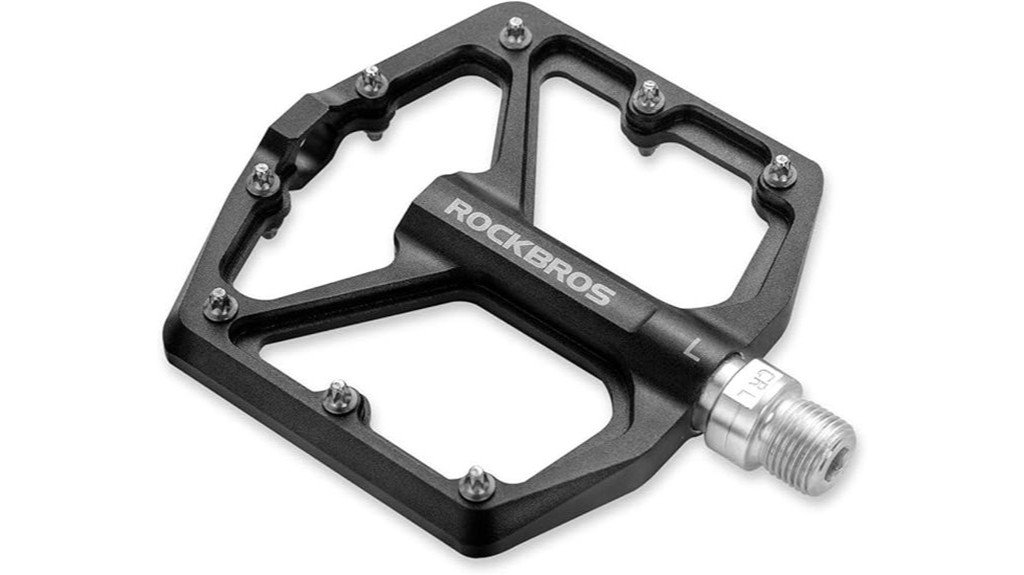
If you want a set of pedals that balance grip, durability, and a lightweight feel for daily e-bike commuting, the ROCKBROS flat aluminum pedals are a smart pick — especially if you ride in mixed conditions or wear regular sneakers. You’ll like the wide 101mm platform that supports up to US size 12 and the stainless steel anti-skid spikes that keep your feet planted. Sealed bearings, a chrome-moly spindle, and carbon fiber bushings resist water and dust, so they stay smooth and quiet. At 302g they’re light, backed by a lifetime warranty, and earn strong user praise overall.
Best For: Riders who want lightweight, durable flat pedals with strong grip and weather-resistant bearings for daily e-bike commuting or casual/intermediate mountain biking while wearing regular sneakers.
Pros:
- Wide 101mm aluminum platform offers stable foot support and fits up to US size 12.
- Stainless steel anti-skid spikes and sealed bearings provide excellent traction and protection from water/dust.
- Lightweight (302g) construction with chrome-moly spindle and carbon fiber bushing plus a lifetime warranty.
Cons:
- Some users report minor bearing smoothness issues out of the box.
- Flat pedals may not suit riders who prefer clipless systems for aggressive riding.
- Spikes can be harsh on softer shoe soles and may wear sneakers faster.
CXWXC Aluminum Alloy Road and MTB Bike Pedals with Removable Anti-Skid Nails
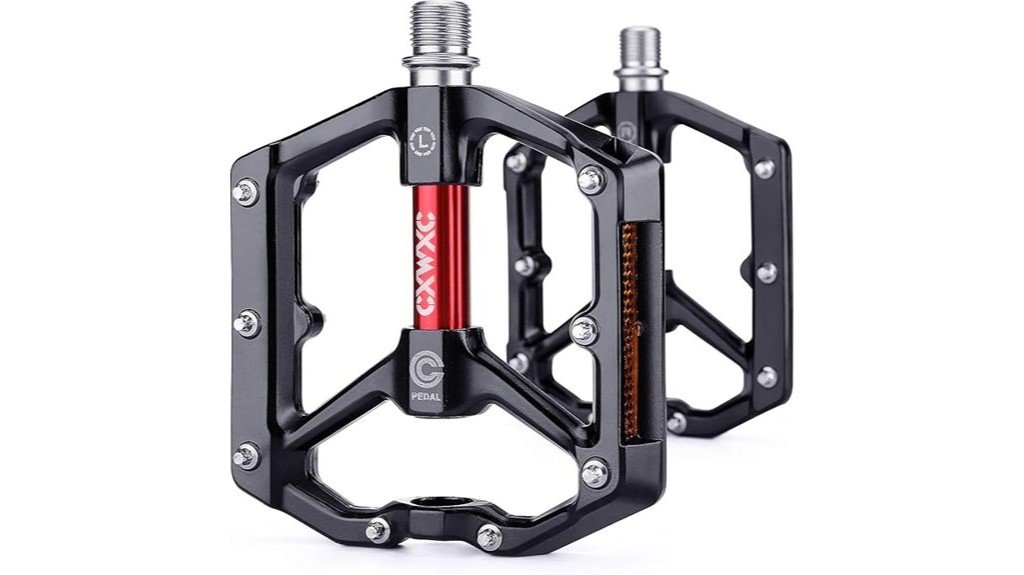
The CXWXC aluminum pedals are a great pick if you want a sturdy, grippy platform for your commuter e-bike—especially when your route includes wet streets or loose gravel. You’ll appreciate the CNC aluminum body and Cr-Mo hardened axle that stand up to daily use without feeling heavy. Each pedal has eight removable anti-skid pins per side and a slightly concave surface, so your feet stay put through turns and puddles. Sealed cartridge bearings mean smoother spins and less maintenance. They fit standard 9/16-inch cranks with clear L/R markings, and the wider platform adds comfort on longer rides.
Best For: Commuters and recreational MTB riders who want a durable, grippy platform pedal for mixed-condition riding (wet streets, gravel) without the bulk of heavier pedals.
Pros:
- CNC aluminum body and Cr-Mo hardened axle provide strong, long-lasting construction.
- Eight removable anti-skid pins per side and a slightly concave surface deliver excellent foot grip and control.
- Sealed cartridge bearings reduce maintenance and offer smoother pedaling.
Cons:
- Platform pedals may offer less power transfer than clipless systems for aggressive road cyclists.
- Pins can wear or require replacement over time, adding minor maintenance.
- At 0.4 lb (each), they’re not the lightest option for weight-conscious riders.
e*thirteen Composite Base Flat Pedals for Mountain and BMX Bikes
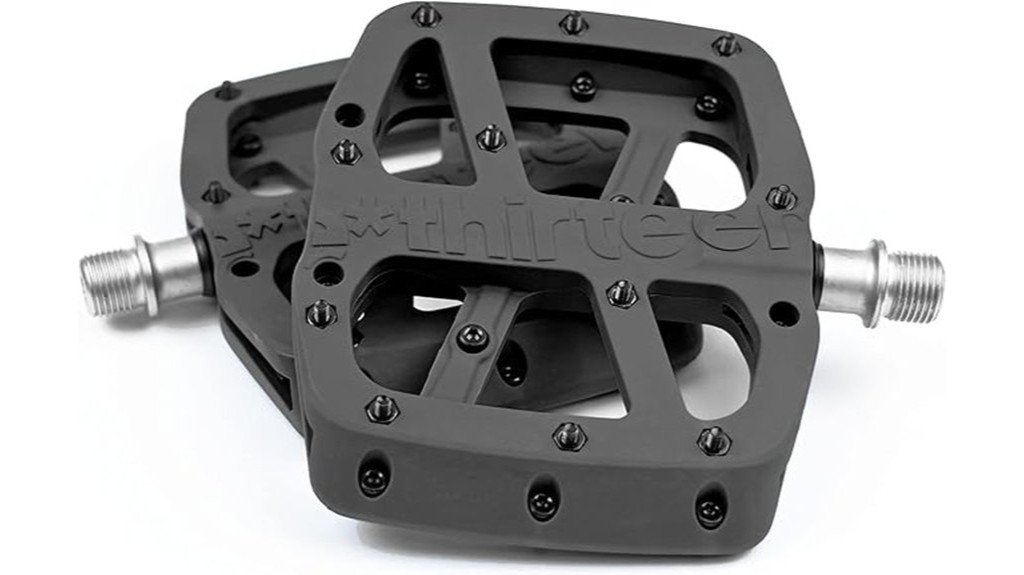
Commuters who want a roomy, grippy platform will like the e*thirteen Composite Base flat pedals, since their large 110 x 100 mm surface and 22 steel pins keep your feet planted whether you’re dodging potholes or hopping curbs. You’ll appreciate the composite body for shock absorption and the forged chromoly axle for strength; that combo makes them light-ish at 401 grams but sturdy enough for daily e‑bike use. Bearings spin smoothly thanks to an inboard bushing and outboard bearing, and riders with 510 soles report excellent traction. Some users noted occasional broken pins, but many buy multiple sets for long-term value.
Best For: Commuters, mountain and BMX riders, and e-bike users who want a large, grippy, and affordable flat pedal platform for stable everyday riding.
Pros:
- Large 110 x 100 mm composite platform with 22 steel pins offers excellent grip and foot stability.
- Forged chromoly axle and smooth inboard bushing/outboard bearing provide durability and reliable spinning.
- Lightweight for the class (401 g) and good value compared with many aluminum pedals.
Cons:
- Some reports of broken or missing pins in shipments can affect long-term reliability.
- Composite body may not be as abrasion-resistant as high-end metal pedals under heavy use.
- Large platform may feel bulky for riders preferring a more minimalist pedal or smaller shoe sizes.
ROCKBROS MTB Lightweight Nylon Fiber Mountain Bike Platform Pedals (9/16)
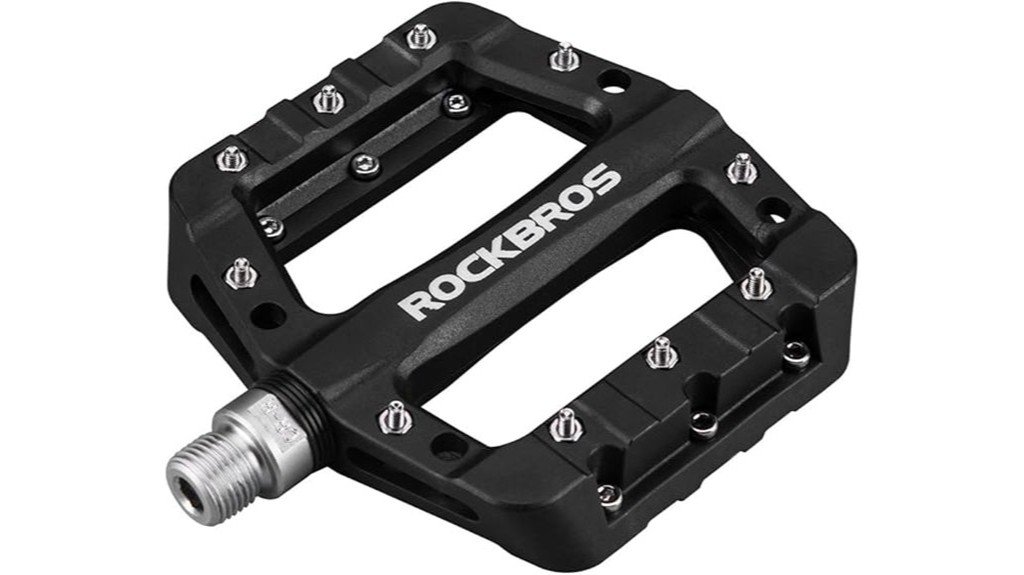
Think of these ROCKBROS pedals as a tough, lightweight upgrade you’ll notice on every ride — they’re great for riders who want secure footing without extra bulk. You get a rugged nylon fiber platform and a Cr‑Mo spindle that handles shocks, abrasion, and corrosion, so they last through wet commutes. Anti‑skid nails grip even muddy shoes, while a 4.1‑inch wide surface keeps your foot stable. At just 0.8 lb with high‑speed DU bearings, they feel smooth and efficient when you pedal. Sealed bearings and CR‑L/CR‑R threading make installation and maintenance simple. They use a universal 9/16 spindle for broad compatibility.
Best For: Riders who want a durable, lightweight platform pedal that provides secure footing and broad bike compatibility for commuting, trail riding, or urban use.
Pros:
- Rugged nylon fiber platform with Cr‑Mo spindle offers shock, abrasion, and corrosion resistance for long-lasting use.
- Anti‑skid nails and a 4.1‑inch wide surface deliver strong grip and stable foot placement, even in muddy conditions.
- Ultralight 0.8 lb design with high‑speed DU sealed bearings provides smooth pedaling and easy maintenance.
Cons:
- Platform pedals lack clipless engagement, which may be less efficient for riders who prefer clip-in systems.
- Nylon fiber construction, while durable and lightweight, may be less premium-feeling than full metal platforms.
- Universal 9/16 spindle fits most bikes but may require adapters for some specialty or vintage cranksets.
PDX G11 Machined Aluminum Concave Platform MTB Bike Pedals (9/16 Chromoly Spindle)
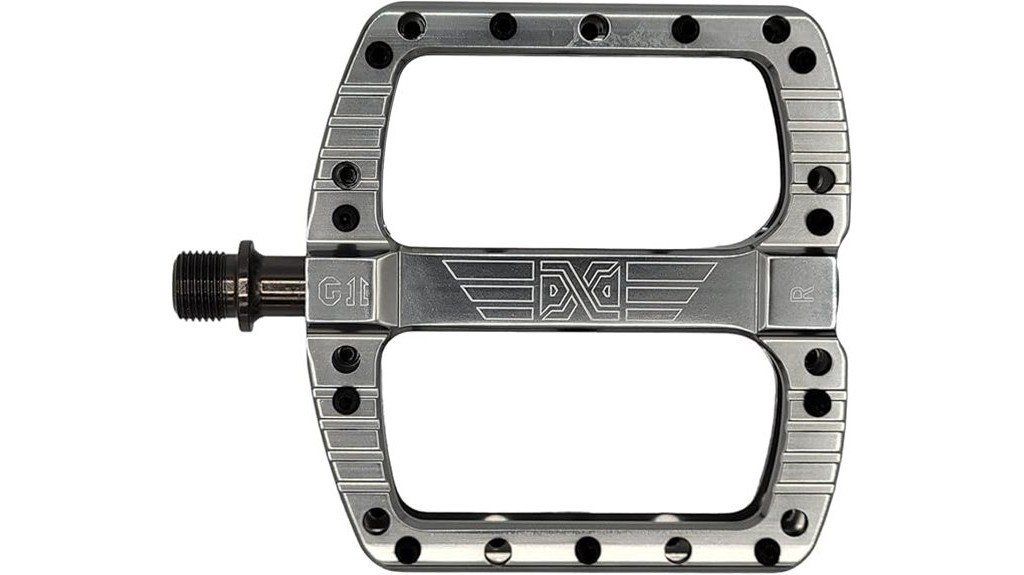
If you want a pedal that feels solid underfoot and grips like it means business, the PDX G11 is a great pick for riders who value control on varied commutes. You’ll appreciate the large machined aluminum platform with a 2mm concave shape that keeps your foot centered, and the polished finish gives it a clean look. At 418 grams per set it’s fairly light, and the 11 pins per side boost traction in wet or sloppy conditions. The chromoly 9/16 spindle, sealed bearings, and included pins, tool, and refresh kit make setup and maintenance straightforward.
Best For: Riders who want a solid, grippy, lightweight platform pedal with durable sealed bearings and a machined aluminum concave design for improved foot stability on varied commutes and trail rides.
Pros:
- Large 110 x 105mm machined aluminum platform with 2mm concave keeps your foot centered and stable.
- 11 pins per side and polished finish deliver strong traction and a clean look; includes 10 replacement pins.
- Durable chromoly 9/16 spindle with 3 sealed ball bearings and included bearing refresh kit for smooth, low-maintenance performance.
Cons:
- At 418 grams per set, not the absolute lightest option for weight-weenies seeking minimal grams.
- Polished aluminum finish may show scratches or wear more visibly over time.
- Platform pedals lack clipless engagement, so they may not suit riders who prefer clip-in efficiency.
Factors to Consider When Choosing Pedals for Commuter E-Bikes
When you’re picking pedals for a commuter e-bike, you’ll want to think about platform size so your feet sit comfortably and grip and traction so you don’t slip in wet weather. Consider durable materials and good bearings, since those affect how long pedals last and how smoothly they spin, and don’t forget weight and overall pedal feel because they change how the bike handles on longer rides. I’ll walk you through each factor simply so you can choose pedals that match your ride, budget, and comfort needs.
Pedal Platform Size
A wider pedal platform—around 101mm or more—can make a big difference on your commute, because it gives your foot better support and more comfort over longer rides. Bigger platforms fit more shoe sizes, so whether you wear sneakers or bulkier shoes you’ll feel stable and less cramped. A slightly concave shape helps center your foot and improves stability, which makes pedaling feel smoother and more efficient. Pay attention to materials: aluminum pedals tend to be light and durable, while composite options can cut weight and resist corrosion. That balance affects how the bike handles and how long the pedals last. Think about your typical route, shoe type, and whether you want rugged longevity or a lighter, more forgiving ride.
Grip and Traction
Because you rely on steady contact with the pedals to feel in control on busy streets, grip and traction deserve as much attention as platform size. A wider platform, like a 101mm pedal, gives your foot more support and makes it easier to stay planted when you start, stop, or dodge a hazard. Look for pedals with anti-skid features such as stainless steel spikes or removable anti-skid nails; they really reduce slipping in rain or on wet pavement. A concave pedal surface also helps your foot sit securely, so you don’t slide forward or off the edge. Sealed bearings keep the spindle turning smoothly despite water and dust, which helps the grip feel consistent ride after ride. Better grip boosts confidence and control in traffic.
Durability and Materials
Many riders overlook pedal materials at first, but choosing the right ones can keep your commuter e-bike running smoothly for years. You’ll want metals like aluminum or chromoly if you ride daily; they resist bending and take knocks that would crush plastic. Look for pedals with rugged tops — nylon fiber or treated aluminum — to fight abrasion and corrosion, especially when rain and grit are regular companions. Don’t ignore weight: lighter pedals can use advanced alloys that still hold up, so you won’t trade durability for a few ounces. Anti-skid features such as removable pins boost grip and spare the pedal surface from wear. Together, these choices mean fewer replacements and more reliable rides, which you’ll appreciate on every commute.
Bearing Quality and Maintenance
If you want pedals that stay smooth and quiet through rainy commutes and gritty streets, pay close attention to the bearings — they’re the small parts that make a big difference. You’ll want sealed or cartridge bearings because they block water and dust, so you’re not servicing pedals every week. Chromoly steel bearings handle heavier loads and last longer, which matters when your e‑bike adds extra weight. Look for pedals designed for easy bearing access so routine maintenance is simple; a quick clean and relube extends life and keeps performance steady. Gaskets or seals cut noise and stop grit from grinding the bearings down, so your ride stays quieter. Choosing pedals with multiple sealed bearings gives the best real-world reliability.
Weight and Pedal Feel
Think of your pedals as the shoes of your e-bike: their weight and how they feel underfoot change the whole ride. You’ll notice lighter pedals help you accelerate and make stops feel less effortful, which matters on a morning commute. Material shapes feel: aluminum gives a solid, responsive connection, while composite or nylon feels a bit softer and forgiving. Platform width matters too — a wider 101mm stance supports your foot on longer trips and reduces hotspots. Grip elements like anti‑skid spikes or removable nails keep you planted in wet weather, so you won’t slip when you need power. Finally, sealed bearings smooth the pedal action and cut friction, helping performance last without constant tinkering. Choose what matches your route and comfort.
FAQ
Are Any of These Pedals Compatible With Clipless Shoe Systems?
1. Are any pedals compatible with clipless shoe systems?
Yes, certain pedals are designed to be compatible with clipless shoe systems. It’s essential to verify each model’s specifications for compatibility.
2. How can I check if a pedal is compatible with clipless shoes?
You can check compatibility by reviewing the pedal’s specifications for cleat compatibility, spindle type, and float. This information is typically available in the product details.
3. What does “cleat compatibility” mean?
Cleat compatibility refers to whether the pedal can accommodate specific cleat designs used in clipless shoe systems. Different manufacturers use unique cleat styles.
4. What is spindle type, and why is it important?
Spindle type indicates the connection mechanism between the pedal and the bike. It’s important because it determines whether the pedal will fit your bike’s crank arm.
5. What does “float” mean in the context of pedals?
Float refers to the amount of lateral movement allowed by the cleat while still being engaged in the pedal. Different pedals offer varying degrees of float to suit rider preference.
6. Are two-sided clipless pedals better for compatibility?
Yes, two-sided clipless pedals typically offer greater compatibility because they allow for easy engagement from either side. This feature can enhance convenience during rides.
7. Can I use adapters with pedals for clipless shoes?
Many pedal models come with adapters that allow them to be used with clipless shoes. Check the product details to see if adapters are included or available for purchase.
8. What should I consider when selecting clipless pedals?
Consider the cleat compatibility, spindle type, and float options to ensure the pedals match your clipless shoe system. Also, think about your riding style and preferences.
9. Are all clipless pedals suitable for every type of cycling?
Not all clipless pedals are suitable for every cycling discipline. Different types of riding may require specific pedal features, so choose accordingly.
10. Where can I find compatibility information for specific pedal models?
Compatibility information can usually be found on the manufacturer’s website or in the product’s user manual. Retailers may also provide details, so check product listings carefully.
Can I Use These Pedals in Freezing or Icy Conditions?
1. Can I use pedals in freezing conditions?
Yes, pedals can be used in freezing conditions, but they may become slippery.
2. What happens to metal parts in icy conditions?
In icy conditions, metal parts of the pedals may stiffen, affecting performance.
3. What type of pedals should I consider for winter?
It’s advisable to use grippy, winter-specific pedals designed for better traction in cold weather.
4. Should I use shoe covers in freezing weather?
Yes, using shoe covers can provide additional grip and warmth when cycling in cold conditions.
5. How can I maintain my pedals in cold weather?
Keep the bearings lubricated with cold-rated grease to ensure smooth operation.
6. How often should I check my pedal tread in winter?
You should frequently check the tread of your pedals to ensure they are safe and effective for use in icy conditions.
7. Will my pedals be affected by snow?
Yes, pedals can become slippery in snow, which can impact your stability and control while cycling.
8. Is it safe to ride with regular pedals in winter?
While it’s possible, regular pedals may not provide the grip needed for safe riding in winter conditions.
9. What should I do if my pedals feel stiff?
If your pedals feel stiff in cold weather, check the lubrication and consider applying cold-rated grease.
10. Can extreme cold damage my pedals?
Extreme cold can affect the functionality of your pedals, particularly if they are not designed for winter use.
Do Any Pedals Include Built-In Reflectors or Lights?
1. Do any bicycle pedals come with built-in reflectors?
Yes, some bicycle pedals feature molded reflectors that enhance visibility during low-light conditions.
2. Are there pedals that include LED lights?
Yes, certain pedal models are equipped with integrated rechargeable LED lights for added illumination.
3. Do built-in reflectors on pedals improve safety?
While built-in reflectors can increase visibility, they should not be relied upon as a substitute for dedicated bike lights.
4. Can I find pedals with both reflectors and lights?
Yes, there are pedals available that combine both molded reflectors and integrated LED lights for enhanced visibility.
5. Are the lights on pedals rechargeable?
Many models with built-in lights come with rechargeable options, allowing for convenient use without the need for battery replacements.
6. How do pedal reflectors work?
Pedal reflectors are designed to bounce light from other sources, making the cyclist more visible to motorists and pedestrians.
7. Do all bike pedals have reflectors?
No, not all bike pedals are equipped with reflectors; it’s a feature found in select models.
8. Are pedal lights effective for night riding?
While pedal lights can improve visibility, they should be used in conjunction with traditional bike lights for optimal safety at night.
9. What types of cycling conditions benefit from pedal reflectors?
Pedal reflectors are particularly useful in urban environments or during dawn and dusk when visibility is reduced.
10. Can I rely solely on pedal lights for nighttime cycling?
No, it’s important to use dedicated bike lights in addition to pedal lights for comprehensive safety when riding at night.
Are Replacement Pins or Spindles Readily Available?
FAQs on Replacement Pins and Spindles Availability
1. Are replacement pins and spindles easy to find?
Yes, replacement pins and spindles are generally easy to locate through various sources.
2. Where can I order replacement pins and spindles?
You can order replacement parts from bike shops, online retailers, or directly from manufacturer websites.
3. Are OEM parts available for replacement?
Yes, both OEM (Original Equipment Manufacturer) and aftermarket parts are available for replacement.
4. Can I install replacement pins and spindles myself?
Typically, you can swap them out yourself using basic tools, making the process user-friendly.
5. What tools do I need to replace pins or spindles?
Basic hand tools are usually sufficient for the installation of replacement pins and spindles.
6. Is there a difference between OEM and aftermarket parts?
Yes, OEM parts are made by the original manufacturer, while aftermarket parts are produced by third-party companies and may vary in quality.
7. How long does it take to replace pins or spindles?
The time required can vary, but most replacements can be completed in a short timeframe, often within an hour.
8. Do I need any special skills to replace pins or spindles?
No special skills are generally required; basic mechanical skills and familiarity with tools are often enough.
9. Are replacement parts compatible with all bike models?
Not all replacement parts are universally compatible, so it’s important to ensure the parts match your specific bike model.
10. What should I do if I can’t find the right replacement?
If you have difficulty sourcing the right part, consider contacting the manufacturer or seeking help from a local bike shop.
Which Pedals Ship With Bearings Pre-Greased?
1. Which manufacturers offer pedals with pre-greased bearings?
Many manufacturers, including Shimano, RaceFace, Crankbrothers, and Wellgo, provide pedals that come with pre-greased bearings.
2. How can I confirm if a pedal has pre-greased bearings?
Check the product listings or seller notes for specific mentions of pre-greased bearings before making a purchase.
3. Are all Shimano pedals pre-greased?
While many Shimano models do ship with pre-greased bearings, it is advisable to verify the specifics on the product page or packaging.
4. Do RaceFace pedals come pre-greased?
Yes, many RaceFace pedals are designed with pre-greased bearings for immediate use, but always check individual product details to be certain.
5. What about Crankbrothers pedals?
Crankbrothers pedals often ship with pre-greased bearings, making them ready for installation straight out of the box.
6. Are Wellgo pedals shipped pre-greased?
Most Wellgo models typically arrive with pre-greased bearings, but it’s prudent to double-check the product information.
7. Is it common for all pedal brands to pre-grease bearings?
Not all brands pre-grease bearings; it varies by manufacturer, so always verify the specifics for each brand.
8. What should I do if I’m unsure about a pedal’s greasing?
If you’re unsure whether a pedal has pre-greased bearings, reach out to the seller for clarification or look for reviews from other buyers.
9. Can I grease the bearings myself if they’re not pre-greased?
Yes, if the bearings are not pre-greased, you can apply grease yourself, but ensure you follow the manufacturer’s instructions for best results.
10. Do pre-greased bearings affect pedal performance?
Pre-greased bearings can enhance pedal performance by reducing friction and ensuring smoother operation right from the start.
Final Thoughts
When it comes to choosing the right pedals for your commuter e-bike, don’t settle for anything less than the best. Based on extensive experience, I can confidently say that comfort, grip, and durability are essential for your daily rides. Opt for wider platforms like the ROCKBROS or PDX for unmatched stability. If adjustable traction is what you seek, the CXWXC with removable pins is your go-to. For those who prioritize weight without sacrificing performance, the ultralight ROCKBROS nylon or e*thirteen’s shock-absorbing composite pedals are top contenders.
It’s crucial to match the pedal weight and grip to your individual commuting needs and riding style. Doing so will result in improved control and reduced fatigue during your rides. Make the right choice and experience a smoother, safer ride—your daily commute deserves nothing less.