
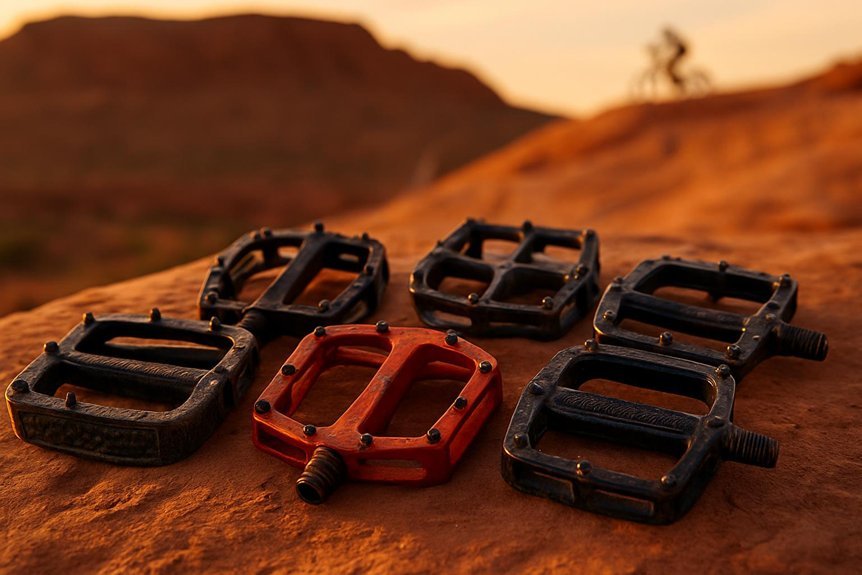
6 Best Pedals for Electric Mountain Bikes — Durable, Grippy Picks for 2026
If you ride an eMTB, picking the right pedals makes a big difference—grip, durability, and weight all affect how confident you feel on rough trails. You’ll want pedals that stay solid under power, shed mud, and resist wear from extra torque. I’ll show six durable, grippy options that balance lightness and toughness, explain why each one stands out, and point out the key trade-offs so you can match a pedal to your riding style—but first, consider how you ride.
e*thirteen Composite Base Flat Pedals for Mountain Bikes (MTB, BMX, eBike, eMTB)
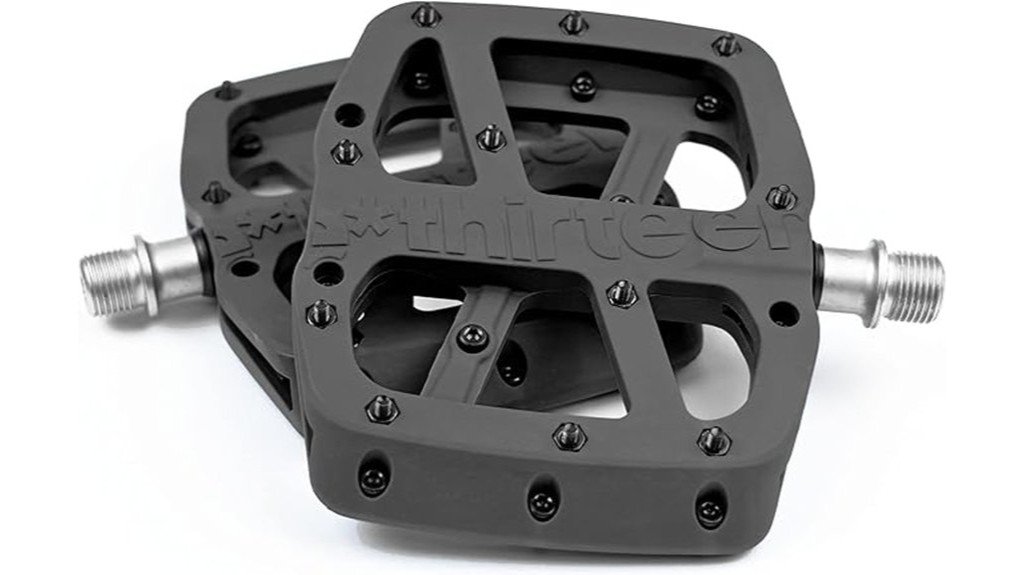
If you’re riding an eMTB and want big, confidence-boosting contact with the trail, the e*thirteen Composite Base flat pedals are a smart, budget-friendly pick — think of them as a solid foundation under your feet. You’ll get a large 110x100mm platform that’s roomy and stable, plus 22 steel pins for excellent grip even when the trail’s sloppy. The composite body keeps weight down while chromoly axles and a bushing/bearing system keep things durable and spinning smoothly. Riders report great value and compatibility with 510 shoes, though watch for occasional missing pins in packaging.
Best For: Riders on eMTBs, mountain bikes, BMX or commuters who want a roomy, grippy, budget-friendly flat pedal with durable axles and smooth bearings.
Pros:
- Large 110x100mm platform with 22 steel pins for excellent grip and stability, especially with 510-style shoes.
- Lightweight composite body combined with forged chromoly axle and bushing/outboard bearing system for durable, smooth performance.
- Strong value — performance close to aluminum pedals at a lower price point.
Cons:
- Composite pins can break and some users report occasional missing pins in packaging.
- Slightly heavier (401 g) than some high-end aluminum options.
- Limited color options (only black) and may not satisfy riders seeking premium finishes.
MZYRH Mountain Bike Pedals, CNC Machined 9/16 Sealed 3-Bearing Pedals
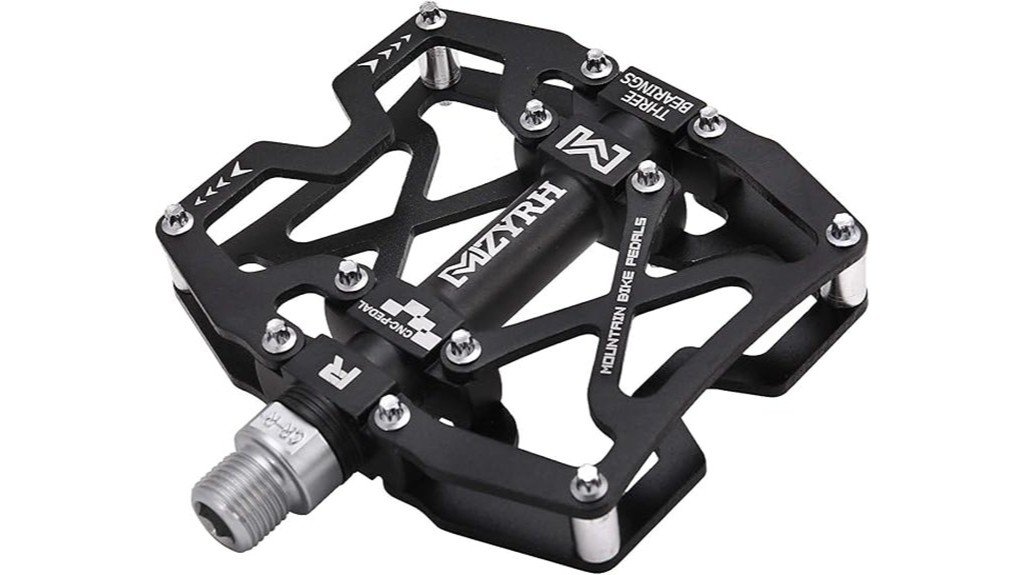
Riders looking for a tough, no-fuss pedal that blends grip, durability, and style will like the MZYRH CNC-machined platform pedals; they’re built from aircraft-quality aluminum with sealed 3-bearing construction and a Cr-Mo spindle, so you get a solid feel and long life without constant maintenance. You’ll notice the sharp nubs bite into your shoes, keeping you planted even after big jumps, and the sealed bearings spin smoothly for a comfortable ride. They’re slightly heavier than stock but only by an ounce, come in bright anodized colors, include spare pins and a tool, and install perfectly. Great value.
Best For: Riders seeking a durable, grippy, and stylish platform pedal—especially casual mountain bikers, BMX riders, and those transitioning from clipless pedals who want reliable, low-maintenance performance.
Pros:
- CNC-machined aircraft-quality aluminum with sealed 3-bearing construction and Cr-Mo spindle for durability and smooth rotation.
- Sharp replaceable nubs and included spare pins/tool provide excellent grip and easy maintenance.
- Attractive anodized dual-color finish, easy installation, and great value for the price.
Cons:
- Slightly heavier than some stock pedals (about an ounce more), which may matter to weight-conscious riders.
- Platform size may be large for riders with very small feet or those preferring compact pedals.
- Not purpose-built for clipless systems—riders wanting clip-in performance will need a different pedal type.
ROCKBROS 4 Bearings Mountain Bike Platform Flat Pedals (Aluminum Alloy, 9/16)
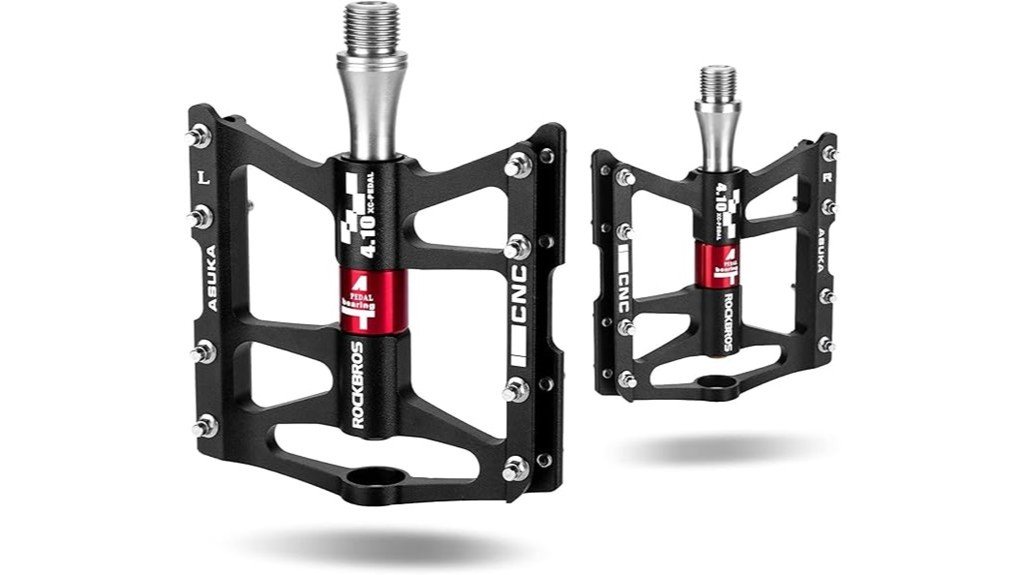
The ROCKBROS 4 Bearings platform pedals are a smart pick for riders who want smooth, stable footing on electric mountain bikes because their four sealed bearings cut friction and keep the pedal spinning without wobble. You’ll like the aluminum alloy body that stays light—only 0.82 pounds—while the large platform and anti-skid nails give solid grip even on rough trails. Installation’s simple with L and R markings and a standard 9/16″ thread that fits most bikes. Riders praise the smooth ride and attractive design, though you should watch for scratches and periodically tighten the pedal spikes for long-term reliability.
Best For: Riders of mountain, gravel, BMX, or urban bikes who want lightweight, stable platform pedals with smooth spinning from sealed bearings and strong grip for trail and e-bike use.
Pros:
- Smooth, wobble-free rotation thanks to four lubricated sealed bearings.
- Lightweight aluminum alloy body (0.82 lb) with a large platform for stability.
- Anti-skid nails provide strong traction; easy installation with marked L/R and 9/16″ thread.
Cons:
- Pedal surface can show scratches over time with heavy use.
- Nail/spike fasteners may need periodic tightening to maintain grip.
- Not a clipless option — less efficient power transfer for riders who prefer clip-in systems.
ROCKBROS Mountain Bike Flat Aluminum Pedals with Sealed Bearings (9/16)
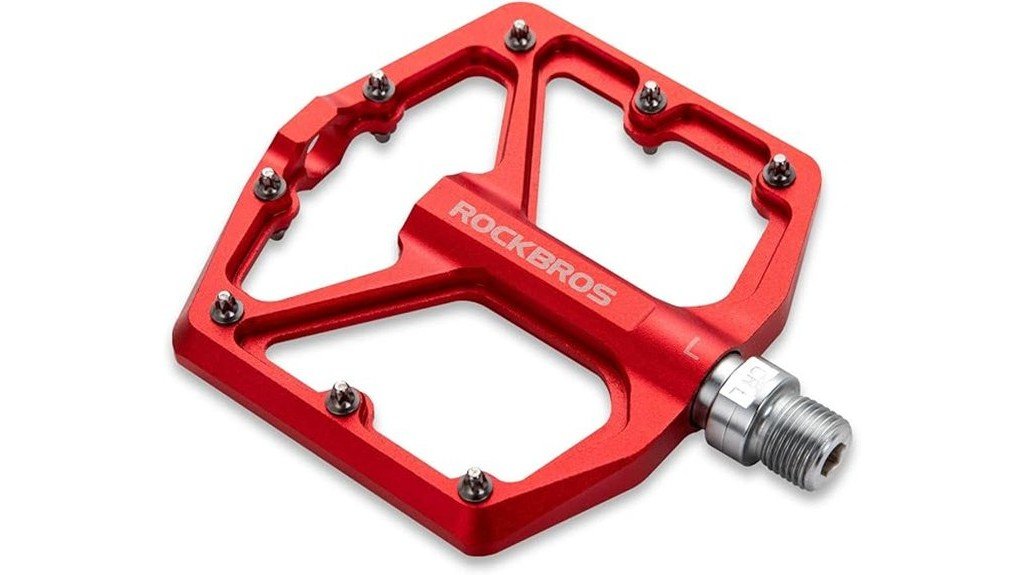
Looking for reliable pedals that won’t let you down on trail days or commutes? You’ll like the ROCKBROS Mountain Bike Flat Aluminum Pedals. They’re a lightweight, 302g pair with a wide 101mm platform that supports up to US size 12 shoes, and the left/right marks make installation simple. CNC aluminum, a chromoly spindle, carbon fiber bushing and sealed bearings give strength, smooth spin, and protection from water and dust. Stainless-steel anti-skid spikes keep your feet planted, and the tapered, modern red design looks sharp. With a lifetime warranty and solid reviews, they’re a great value for casual and intermediate riders.
Best For: Riders seeking an affordable, durable set of flat MTB pedals with good grip and smooth sealed bearings for casual trail riding, commuting, or upgrading stock pedals.
Pros:
- Lightweight yet sturdy CNC aluminum body with chromoly spindle and sealed bearings for smooth, durable performance.
- Wide 101mm platform and stainless-steel anti-skid spikes provide stable, confident foot placement for up to US size 12 shoes.
- Lifetime warranty and high customer ratings indicate strong value and reliability for casual to intermediate riders.
Cons:
- Platform may not suit riders who prefer clipless pedals or very large shoe sizes beyond US 12.
- Fixed pins could wear or be uncomfortable with some shoe soles and may require replacement for long-term aggressive use.
- Not as feature-rich or lightweight as high-end premium pedals aimed at competitive riders.
ROCKBROS Mountain Bike Nylon Fiber Platform Pedals (9/16)
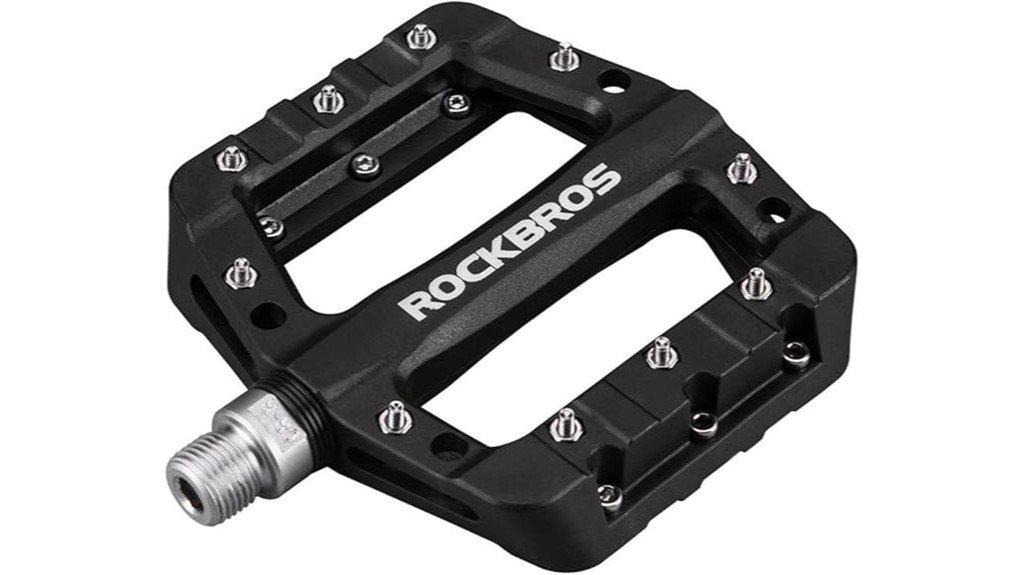
If you want a lightweight, grippy pedal that won’t bend under rough trail use, the ROCKBROS nylon fiber platform is a smart pick for e-MTB riders who value stability and durability. You get a rugged nylon fiber body and a Cr-Mo spindle built to resist shock, abrasion, and corrosion, so it holds up when trails get nasty. The 4.1-inch wide platform and anti-skid nails keep your foot planted, even in mud, while high-speed DU bearings smooth pedaling. At 0.8 lb per pair it’s surprisingly light, installs easily with CR-L/CR-R threads, and fits any 9/16-inch crank.
Best For: Riders seeking a lightweight, durable, and grippy platform pedal for e-MTBs and other bikes who prioritize stability and resistance to rough trail conditions.
Pros:
- Rugged nylon fiber body with Cr-Mo spindle offers shock, abrasion, and corrosion resistance for long-lasting use.
- 4.1-inch wide platform with anti-skid nails provides secure foot placement and excellent grip, even in muddy conditions.
- High-speed DU sealed bearings and ultralight 0.8 lb design improve pedaling smoothness and comfort while protecting internals from water and dust.
Cons:
- Platform pedals lack clip-in capability preferred by riders who want maximum power transfer and foot positioning.
- Nylon body, while durable, may not match the impact resistance or premium feel of high-end metal or composite pedals.
- Universal 9/16 size fits most cranks but may require adapters or different threading for uncommon or older crank standards.
OneUp Composite Flat Pedals for Mountain Bikes (MTB)
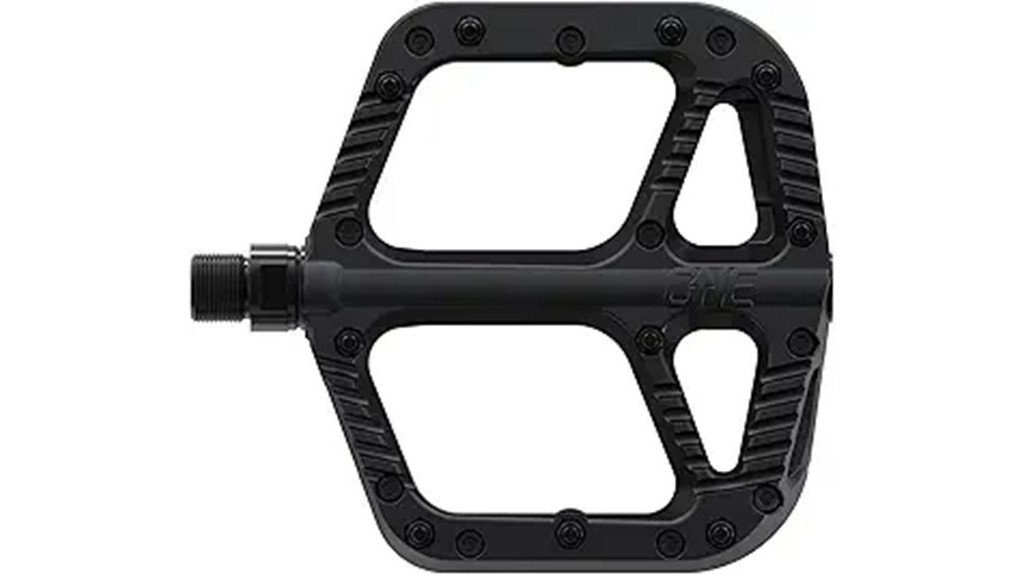
OneUp’s Composite Flat Pedals are a great choice if you want a lightweight, low-profile pedal that still gives you solid grip on rough trails and daily rides. You’ll like the big 115x105mm platform and ultra-thin, slightly convex profile that helps prevent pedal strikes while keeping your foot stable. At 355g, they’re light but built tough with a nylon composite body, chromoly axle, and stainless pins. Installation’s simple and they fit most cranks. Riders praise the grip and durability, though pins can wear shoe soles and the shape may pressure some feet. Six colors and a one-year warranty sweeten the deal.
Best For: Riders who want a lightweight, low-profile flat pedal with a large platform and reliable grip for mountain biking, commuting, and casual trail riding.
Pros:
- Lightweight (355g) and low-profile 115x105mm platform reduces pedal strikes while providing stability.
- Durable construction (nylon composite body, chromoly axle, stainless steel pins) suitable for rough trails.
- Strong grip with 10 hexagonal pins per side and available in six colors; easy to install and service.
Cons:
- Pins can accelerate wear on shoe soles.
- Slightly convex profile may create pressure points for some riders.
- Pedal height range (13.3–18.5mm) may not suit riders wanting a much thicker platform.
Factors to Consider When Choosing Pedals for Electric Mountain Bikes
When you’re picking pedals for an electric mountain bike, a few key features will make the biggest difference in comfort and control. Think about platform size and shape to fit your foot, grip and pin pattern to keep you planted, and sturdy axle material plus quality bearings and seals so they last through mud and hits. Also weigh the tradeoff between weight and durability—lighter pedals feel snappier, but tougher builds often stand up better to e-bike power and rough trails.
Platform Size and Shape
Platform size and shape play a big role in how confident and comfortable you feel on an electric mountain bike, so it’s worth paying attention to the details. Larger platforms—think around 110x100mm or about 4 inches—give your foot more support and spread pressure, which cuts fatigue on long rides. If you climb steep trails, an ultra-thin, slightly convex pedal can help reduce strikes while still matching the curve of your sole for efficient power transfer. Make sure the pedal’s form works with the shoes you ride; some soles need flat contact while others sit better on a subtly scooped surface. And although pins add traction in wet mud, pick a shape that balances shoe compatibility, stability, and clearance for clearances.
Grip and Pin Pattern
Grip matters more than you might think—especially on electric mountain bikes that haul you faster and hit rougher trails—because it’s what keeps your feet planted when things get rowdy. You want a pedal whose surface and pin pattern lock your shoe in place without feeling like a medieval torture device. More pins usually mean better traction; many riders praise layouts like a 22-pin arrangement for holding feet steady on rocky descents. Bigger platforms (think 110x100mm or larger) give a more stable base so your foot doesn’t wander. Material matters too: composite pedals often have textured surfaces that grab rubber better than smooth metal. Pairing the right pin layout with grippy shoes makes a huge difference in confidence and control.
Bearing Quality and Seals
Think of your pedal bearings as the hidden workhorses of your ride: they control how smoothly the pedal spins, how much wobble you feel, and how long the whole unit lasts under mud, rain, and hard landings. You’ll want sealed bearings to keep water and dust out — that simple barrier makes a huge difference in lifespan and consistent performance. Pedals with multiple sealed bearings cut friction, so your rotation stays smooth and efficient, especially when the motor adds torque. Good bearing design also reduces endplay, giving you stability and confidence at higher speeds. Use pedals made with high-quality materials and durable seals, and check spikes and clean debris regularly; a little maintenance keeps bearings spinning true and lasting longer.
Axle Material and Strength
One of the most important parts of a pedal you don’t usually see is the axle, and it plays a huge role in how your e-MTB handles abuse from big hits and motor torque. You’ll want chromoly steel axles if you ride hard or tackle rough trails; they resist bending and breaking under the extra forces electric motors produce. Aluminum axles save weight and feel quicker, but they can be less forgiving when you throw the bike around. Think about your riding: heavier, powerful bikes and aggressive lines benefit from steel for reliability and control. Pair a strong axle with sealed bearings to keep grit out and maintain smooth rotation — that combo extends pedal life and keeps your ride predictable.
Weight Versus Durability
Axles that can take hits are only half the story — how much your pedals weigh versus how tough they are will shape how your e-MTB feels on the trail. You’ll notice lighter pedals help with acceleration and make quick maneuvers feel easier, especially on climbs or techy sections. But electric motors add torque and stress, so pedals must resist impacts and stay reliable. Choose materials wisely: aluminum gives sturdiness but adds weight, while modern composites cut grams without falling apart. Look for sealed bearings and strong spindle design to keep grit out and extend life. Don’t chase the lightest option; pick pedals that match your riding style and terrain so you get both performance and longevity.
Pedal Thickness and Clearance
Pedal thickness and clearance play a big role in how your e-MTB handles on the trail, so you’ll want to weigh the trade-offs rather than just grabbing the coolest-looking set. Thinner, low-profile pedals lift your feet farther from crank arms and help avoid strikes on rocks or roots, which feels safer on technical lines. Thicker pedals sit higher and can offer a broader platform, giving more support and better power transfer when you’re grinding climbs or sprinting. Thickness also shifts weight distribution slightly, so you might notice changes in balance or control on steep descents. Match pedal thickness to your shoe size and riding style: larger feet often benefit from wider, thicker platforms, while nimble riders on tight trails usually prefer low-profile clearance.
Shoe Compatibility and Fit
How do you know if a pedal will actually work with your shoes and give you the control you need on technical e-MTB trails? First, match pedal style to shoe type — flat pedals pair best with grippy MTB shoes that have stiffer soles for power transfer, while clipless pedals need shoes with compatible cleats. Check platform size so your whole foot sits comfortably; wider platforms around 110mm or more add stability, especially on rough sections. Look for traction features like pins or nubs to prevent slipping when things get muddy. Think about pedal weight too: lighter pedals reduce fatigue on long climbs. Finally, confirm thread size matches your crank (most MTB pedals use 9/16-inch) so installation is safe and secure.
Maintenance and Serviceability
Because you’ll be relying on your pedals every time you head out, think about maintenance and serviceability before you buy so you won’t get stranded mid-ride. Check that spikes are easy to tighten and bearings run smoothly; a quick pre-ride inspection can save a lot of trouble. Prefer sealed bearings when you can — they keep water and dust out, cut down on service, and last longer. Look for pedals with clear left/right markings and simple threads so you can swap or reinstall them without special tools. Some models include spare spikes or small tools, which is a nice bonus for roadside fixes. Finally, choose pedals designed for easy disassembly so you can do routine checks and repairs yourself, saving time and money.
FAQ
Can I Use These Pedals on Non-Electric Mountain Bikes?
FAQs About Using Pedals on Non-Electric Mountain Bikes
1. Can I use these pedals on a non-electric mountain bike?
Yes, these pedals are compatible with non-electric mountain bikes.
2. Do these pedals fit standard crank threads?
Absolutely, they are designed to fit standard crank threads.
3. Will these pedals affect my bike’s compatibility?
No, using these pedals will not affect your bike’s compatibility in any way.
4. What benefits do these pedals provide?
They offer enhanced grip and durability, improving your riding experience.
5. How do these pedals improve traction?
The design of the pedals boosts traction, giving you more control on various terrains.
6. Will I experience any drivetrain issues with these pedals?
No, you should not experience any drivetrain issues when using these pedals.
7. Are these pedals suitable for all mountain biking conditions?
Yes, they are suitable for a wide range of mountain biking conditions due to their grip and stability.
8. What materials are these pedals made of?
They are typically made of durable materials designed to withstand rigorous use.
9. Do these pedals require special installation?
No, they can be installed using standard tools without the need for special equipment.
10. Can these pedals enhance my riding performance?
Yes, they can enhance your riding performance by providing better control and stability.
How Do Pedal Axle Diameters Affect Compatibility With Crankarms?
1. What is pedal axle diameter?
Pedal axle diameter refers to the width of the spindle on which the pedal attaches. It is crucial for ensuring compatibility between pedals and crankarms.
2. How does pedal axle diameter affect crankarm compatibility?
The crankarm hole size must match the pedal axle diameter for proper fit. If these sizes are mismatched, it can lead to damage or improper functionality.
3. What happens if the pedal axle is larger than the crankarm hole?
If the pedal axle is larger, it may not fit at all or could require adapters. Using an incompatible size can damage threads or create play in the pedal.
4. Are there any potential issues with smaller pedal axles?
Smaller pedal axles may fit into larger crankarm holes, but they can lead to instability and wear over time. Ensuring a snug fit is essential for safety and performance.
5. Can I use adapters for mismatched pedal and crankarm sizes?
Yes, adapters may allow for compatibility between mismatched sizes. However, it’s important to verify the quality and fit of the adapters to avoid complications.
6. What specifications should I check for pedal compatibility?
Always check the pedal axle diameter and the crankarm hole size before purchasing. This ensures that both components will fit together seamlessly.
7. Can using mismatched pedal and crankarm sizes damage my bike?
Yes, mismatched sizes can strip threads or cause excessive play, leading to potential damage over time. It’s vital to ensure compatibility to maintain bike integrity.
8. How can I verify the specs of my pedals and crankarms?
Check the manufacturer specifications or consult with a bike shop to confirm the sizes. Measurement tools can also help determine axle and hole dimensions.
9. Do all bike brands use the same pedal axle diameters?
No, different bike brands and models can have varying pedal axle diameters. Always consult the specific model’s specifications for the best results.
10. What is the most common pedal axle diameter?
The most common pedal axle diameter is 9/16 inches, but sizes can vary. Always verify the specific measurements for your bike components before making a purchase.
11. Is it safe to mix and match pedals and crankarms from different brands?
Mixing and matching can be safe if the specifications match; however, it’s advisable to stick with the same brand when possible. This minimizes the risk of compatibility issues.
Are Any of These Pedals Suitable for Clipless Shoe Systems?
1. Are there pedals that work with clipless shoe systems?
Yes, some pedals are designed specifically for clipless systems.
2. What types of pedals support clipless cleats?
You can find dual-sided models that accept clipless cleats, allowing for versatility in shoe compatibility.
3. Can I convert standard pedals to be compatible with clipless shoes?
Yes, some models have convertible platforms that can be removed to reveal SPD-compatible bodies.
4. What does “SPD-compatible” mean?
SPD-compatible refers to pedals that are designed to work with Shimano’s SPD cleats, commonly used in clipless shoe systems.
5. Are all dual-sided pedals suitable for clipless systems?
Not all dual-sided pedals are clipless-compatible; it’s essential to check the specifications before purchasing.
6. Can I ride clipped in with these pedals?
Yes, if the pedals are compatible with clipless cleats, you can ride clipped in for better performance and control.
7. Do I need special shoes for clipless pedals?
Yes, you will need shoes that are specifically designed to accommodate clipless cleats for optimal use.
8. Are convertible pedals easy to use?
Convertible pedals are designed for convenience, allowing you to switch between standard and clipless setups with ease.
9. What are the benefits of using clipless pedals?
Clipless pedals provide improved power transfer and stability, as they securely attach your foot to the pedal.
10. How do I choose the right clipless pedal for my needs?
Consider your riding style, shoe compatibility, and whether you prefer dual-sided or convertible options to find the best fit for your cycling needs.
What Maintenance Schedule Prevents Bearing Failure in Wet Conditions?
1. How often should I service pedal bearings in wet conditions?
You should service pedal bearings every 1–2 months in wet environments to ensure optimal performance.
2. What steps are involved in servicing pedal bearings?
The servicing process includes cleaning, drying, repacking with waterproof grease, replacing seals if necessary, and inspecting for any play.
3. Why is it important to clean and dry pedal bearings?
Cleaning and drying pedal bearings help to remove moisture and contaminants that can lead to corrosion and premature failure.
4. What type of grease should I use for repacking pedal bearings?
It is recommended to use waterproof grease for repacking to protect the bearings from moisture and enhance their longevity.
5. How can I tell if the seals on my pedal bearings need replacing?
Inspect the seals for any cracks, tears, or signs of wear. If they appear damaged, it’s best to replace them to prevent water ingress.
6. What is ‘play’ in pedal bearings, and why is it important to inspect for it?
‘Play’ refers to any unwanted movement in the bearings. Inspecting for play is crucial as it can indicate wear and could lead to bearing failure if not addressed.
7. What are the consequences of neglecting pedal bearing maintenance in wet conditions?
Failing to maintain pedal bearings in wet conditions can result in corrosion, decreased performance, and ultimately bearing failure.
8. Can regular maintenance extend the lifespan of pedal bearings?
Yes, consistent maintenance can significantly prolong the life of pedal bearings by preventing moisture buildup and corrosion.
9. Is there a specific method for cleaning pedal bearings?
The method typically involves disassembling the pedals, using a solvent to clean the bearings, and thoroughly drying them before repacking.
10. What tools do I need for servicing pedal bearings?
Basic tools include a pedal wrench, clean rags, a small brush, waterproof grease, and a seal replacement kit if needed.
Do These Pedals Affect Battery Range or Motor Performance?
1. Do heavy pedals impact battery range?
Yes, excessively heavy pedals can lead to a slight increase in battery drain. However, this effect is generally minimal unless the pedals are significantly heavier than normal.
2. Can damaged pedals affect motor performance?
Damaged pedals can negatively affect motor performance by causing inefficient energy transfer. This may result in a decrease in overall efficiency and responsiveness.
3. What role do bearings play in pedal performance?
Poor bearings can increase resistance, which may lead to a slight decrease in battery range. Ensuring that bearings are well-maintained can help optimize performance.
4. Does debris stuck in the pedals affect efficiency?
Yes, debris stuck in the pedals can lead to increased rolling resistance. This additional resistance may cause the motor to work harder, impacting battery range.
5. Are there any performance concerns with lightweight pedals?
Lightweight pedals typically do not negatively affect battery range or motor performance. In fact, they may enhance the efficiency of the overall system.
6. How can I minimize battery drain from pedals?
Regular maintenance, including checking for debris and ensuring bearings are in good condition, can help minimize battery drain. Opting for quality, lightweight pedals also helps.
7. Is there a threshold weight for pedals to avoid battery impact?
While there isn’t a specific weight threshold, pedals that are excessively heavy compared to standard options may lead to noticeable battery drain. It’s best to choose pedals that are lightweight yet durable.
8. What signs indicate poor pedal performance?
Signs of poor pedal performance include unusual resistance when pedaling and decreased responsiveness from the motor. If you notice these symptoms, it may be time to inspect your pedals.
9. Can the type of pedals affect motor efficiency?
Yes, the type of pedals can influence motor efficiency, especially if they are designed for heavy-duty use. Choosing the right pedals for your riding style is essential for optimal performance.
10. How often should I check my pedals for issues?
It is advisable to check your pedals regularly, especially if you notice any performance issues. Regular maintenance can prevent minor problems from escalating into significant performance losses.
Final Thoughts
When it comes to choosing pedals for your electric mountain bike, you’ve got some solid options that can significantly enhance your riding experience. Lightweight composite pedals offer comfort without sacrificing performance, while CNC-machined aluminum pedals provide exceptional grip for those aggressive trails. Don’t overlook sealed-bearing options; they ensure smooth rotation and longevity, keeping you on the trail longer.
Select pedals that align with your riding style—if you’re an aggressive trail rider, you need big, grippy platforms that can handle the demands of rugged terrain. Casual eMTB riders, on the other hand, might find that lighter, simpler pedals suit their needs better. Always consider durability, traction, and weight; these factors are crucial in making your ride enjoyable and safe.
Pay attention to the quality of the pins and the protection of the bearings; these small details can make a big difference in performance. If possible, test a pair before you commit. The right pedals will not only boost your confidence on the bike but also elevate the overall fun factor of your eMTB experience. Trust me, investing time in selecting the right pedals is worth it.