
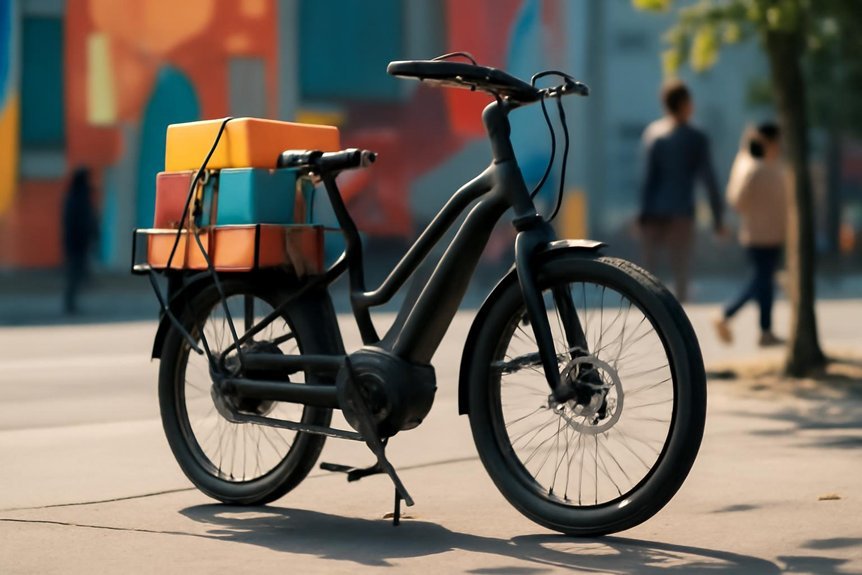
How to Carry Cargo on an E-Bike
Carrying cargo on your e-bike can transform an ordinary ride into an adventure filled with possibilities. Imagine this: you’re pedaling through your neighborhood, the sun shining down, when you suddenly remember that you promised your friend you’d bring over their favorite snacks for movie night. With a quick stop at the store, you can grab everything you need and feel like a hero on two wheels.
Before you set off, though, it’s important to know your e-bike’s weight limit. Picture loading up your bike with a few heavy bags, only to realize halfway there that you’ve exceeded the recommended weight. That’s a recipe for a wobbly ride—and no one wants to feel like they’re auditioning for a circus act!
Next, think about the right accessories. Investing in panniers or a sturdy rear rack can make a world of difference. Just last week, I saw a fellow cyclist effortlessly balance a load of groceries in sleek panniers, gliding past me with a smile. It reminded me that with the right setup, not only can you carry your cargo securely, but you can also maintain stability and confidence on the road.
So, how do you strike that perfect balance? It’s all about distributing the weight evenly, like packing a suitcase. Imagine packing a picnic for a sunny day in the park: you wouldn’t just toss everything in haphazardly, right? You’d carefully arrange the items, ensuring that the heavier ones are at the bottom, so your bike rides smoothly.
With some preparation and the right gear, you’re ready to hit the road, whether it’s for a quick errand or a delightful escape into nature. So go ahead, load up your e-bike, and enjoy the ride!
Understanding Your E-Bike’s Weight Limitations
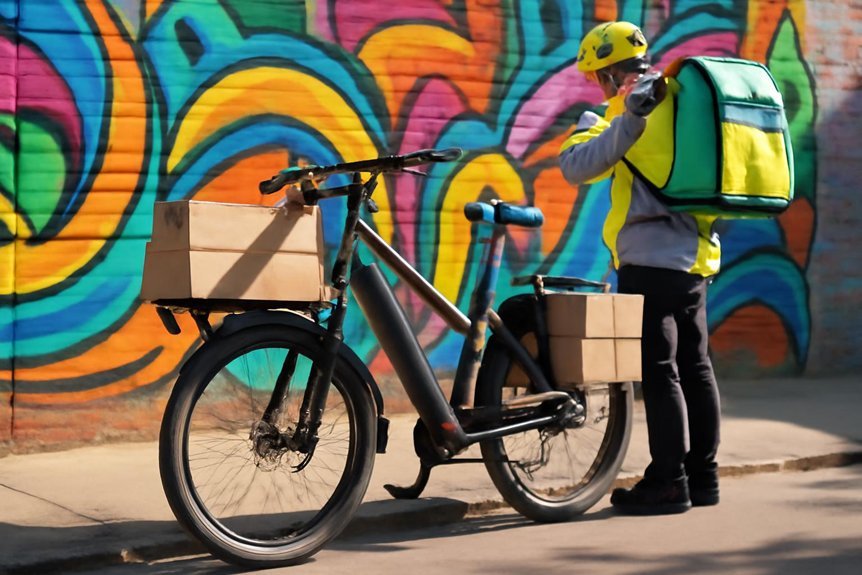
When you’re ready to load up your e-bike with cargo, it’s crucial to understand its weight limitations. Each e-bike has a maximum load capacity, which includes the weight of you, your gear, and any additional cargo.
If you exceed this limit, you might face handling issues, reduced battery life, or even damage to your bike. It’s like trying to fit a hippo in a tiny car—something’s gotta give!
So, take a moment to check your e-bike’s manual or look for a sticker on the frame that lists the weight limits. By knowing these numbers, you’ll guarantee a safer, smoother ride while keeping your e-bike in tip-top shape.
Choosing the Right Cargo Accessories
Choosing the right cargo accessories can make all the difference in your e-biking experience, especially if you plan to carry more than just a backpack.
Start by considering what you’ll be hauling. If you’ve got groceries or gear, panniers are a great option; they attach easily to your bike and help balance the weight. For those larger items, like a picnic basket or sports equipment, a cargo net can keep everything secure.
Don’t forget about a sturdy lock to protect your accessories while you take a break!
Finally, think about your comfort—handlebar bags can be handy for snacks or your phone. Choosing wisely means you’ll enjoy your ride even more, making every trip a little adventure!
Using a Rear Rack for Efficient Storage
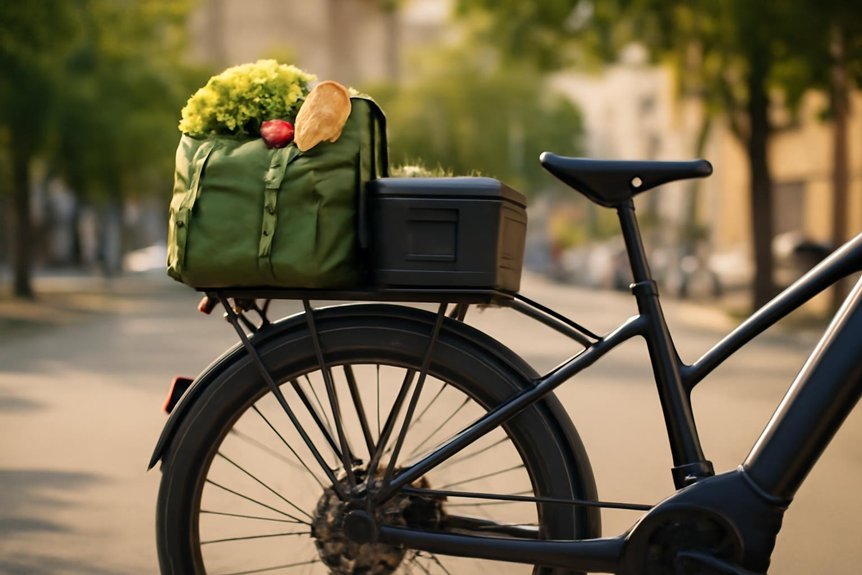
A rear rack can be a game-changer for your e-bike, giving you a convenient way to carry extra cargo.
With a sturdy rack in place, you can easily attach items like bags, boxes, or even a picnic blanket for your next adventure. It’s all about balance, so make sure to distribute the weight evenly. You don’t want your e-bike tipping over like a clumsy giraffe!
If you’re planning a longer ride, securing your cargo with bungee cords or straps can keep everything in place. Plus, using a rear rack frees up space in your backpack, letting you enjoy a more comfortable ride.
Benefits of Panniers for Carrying Cargo
Panniers are a fantastic option for carrying cargo on your e-bike, offering a blend of convenience and stability. They’re designed to hang on your bike’s sides, which helps distribute weight evenly. This means you won’t have to worry about tipping over or losing balance, even with heavy loads.
Panniers come in various sizes, so you can choose the right fit for your groceries, books, or gear. Plus, they’re easy to attach and detach, making loading and unloading a breeze. Some even have waterproof options, keeping your items safe from rain.
With panniers, you can ride comfortably while carrying everything you need, turning your e-bike into a mini cargo truck without the hassle!
Exploring the Use of Bike Baskets
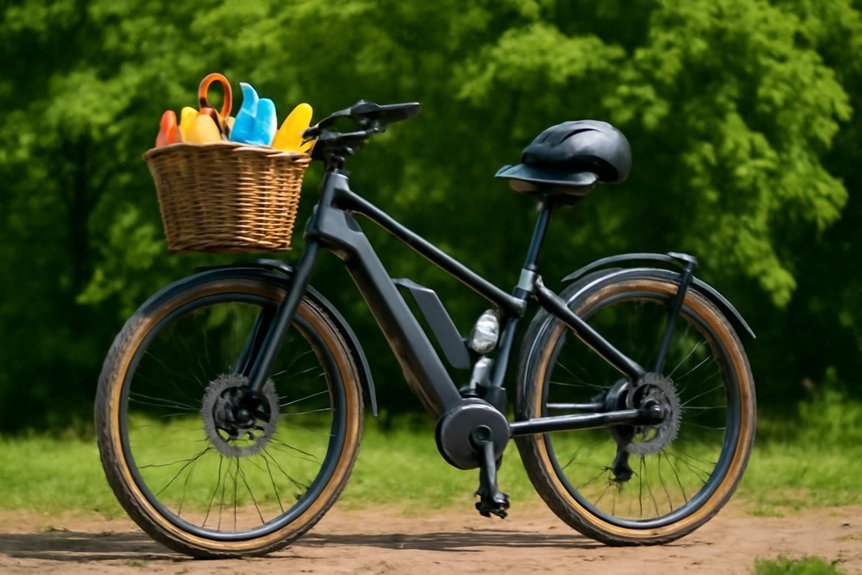
When you think about carrying cargo on your e-bike, bike baskets might just be the perfect solution! They’re easy to attach and can hold a variety of items, from groceries to books.
Plus, they give your e-bike a fun, stylish look. Imagine this: you’re pedaling along, and your basket is filled with snacks for a picnic or your favorite library finds. It’s convenient and keeps your hands free for steering.
Most baskets are lightweight but sturdy, so you don’t have to worry about them wobbling. Just make sure to choose one that fits your e-bike’s handlebars!
With a bike basket, you can enjoy your ride while bringing along everything you need for an adventure.
Securing Cargo With Bungee Cords and Straps
Securing your cargo with bungee cords and straps can make all the difference in enjoying a smooth ride on your e-bike.
These handy tools are perfect for keeping your items in place, so you don’t end up with a surprise game of “catch the falling groceries.”
First, hook the bungee cord around your cargo and attach it to a stable point on your bike. This way, it won’t budge or swing as you pedal.
Straps work similarly; they’re great for larger items. Just remember to tighten them well but not so much that you risk damaging your cargo.
With a bit of practice, you’ll secure your cargo like a pro, making your rides both safe and enjoyable!
Tips for Balancing Weight on Your E-Bike
Balancing weight on your e-bike is essential for a smooth and safe ride, especially if you’ve got a load that could tip the scales.
First, distribute your cargo evenly. Place heavier items low and centered, keeping the weight close to the bike’s frame. This helps maintain stability.
If you’re using a rear rack, try to balance it with some weight in the front, like a handlebar bag.
Also, keep in mind that adjusting your riding style can help. Lean slightly forward when you have a heavy load to keep your balance.
Finally, don’t forget to check your tire pressure! Properly inflated tires can handle the extra weight better, making your ride more enjoyable.
Happy biking!
Navigating Different Terrain With Cargo
Riding an e-bike with cargo isn’t just about keeping your balance; it’s also about how you handle different types of terrain. When you hit a bumpy road, you’ll want to lower your center of gravity. This helps you maintain control while maneuvering those pesky potholes.
On steep hills, take advantage of your e-bike’s pedal assist to ease the strain. If you encounter gravel or dirt trails, slow down and steer with gentle movements; sudden shifts can throw you off balance.
Maintenance Considerations for Loaded E-Bikes
When you’re hauling cargo on your e-bike, keeping up with maintenance is essential to guarantee a smooth ride.
First, check your tires regularly; they need to be properly inflated to support the extra weight. Worn-out tires can lead to flat spots or blowouts.
Next, inspect the brakes—loaded bikes require more stopping power, so make sure they’re in top shape.
Don’t forget about your battery; carrying cargo can drain it faster, so keep it charged and clean.
Also, lubricate your chain often to avoid wear and tear.
Finally, give your bike a quick once-over before every ride; a little attention goes a long way.
Safety Tips for Carrying Cargo on an E-Bike
Making sure your e-bike is in great shape is just the start; safety becomes even more important when you’re carrying cargo.
First, always distribute weight evenly. If your load’s heavy on one side, you might topple over like a wobbly tower!
Next, secure your cargo tightly. Loose items can shift and distract you while you ride.
It’s also wise to check your brakes before you head out; good brakes are your best friends in emergencies.
Additionally, ride at a comfortable speed, and give yourself plenty of space to stop.
Finally, wear a helmet and consider reflective gear, especially if you’re riding at night.
With these tips, you can enjoy your ride while keeping safety front and center!
FAQ
Can I Carry a Child on My E-Bike Along With Cargo?
1. Can I carry a child on my e-bike?
Yes, you can carry a child on your e-bike, provided you use the correct child seat designed for biking.
2. What type of child seat should I use?
Choose a child seat that is specifically made for bicycles, ensuring it meets safety standards and fits securely on your e-bike.
3. Are there weight limits for carrying a child?
Yes, it’s important to check both the child seat’s weight limit and your e-bike’s cargo capacity to ensure safe transport.
4. Is it safe to carry cargo and a child at the same time?
Carrying both cargo and a child is possible, but you must ensure that the weight is balanced and within the limits of your e-bike.
5. What safety precautions should I take?
Always prioritize safety by securing the child in the seat, wearing helmets for both, and maintaining stable riding.
6. Is there an age limit for carrying children on e-bikes?
Check local laws, as many regions have specific age or weight regulations governing how young children can ride on e-bikes.
7. How can I ensure my child is safe while riding?
Make sure your child is properly strapped into the seat and is wearing a helmet that fits correctly.
8. Can I modify my e-bike to carry a child?
Modifications may be possible, but they should comply with safety regulations and should not exceed the e-bike’s original weight limits.
9. What should I do if my e-bike doesn’t have a child seat option?
If your e-bike is not equipped for a child seat, consider alternatives like a cargo bike or a trailer designed for carrying children safely.
10. Are there specific laws I should be aware of?
Yes, familiarize yourself with local traffic laws regarding e-bike usage, especially those that pertain to carrying passengers or cargo.
Are There Specific E-Bikes Designed for Heavy Cargo Loads?
1. What are e-bikes designed for heavy cargo loads?
E-bikes designed for heavy cargo loads are specialized bicycles built to carry substantial weight. They typically include features like reinforced frames and enhanced suspension systems.
2. What features distinguish cargo e-bikes from regular e-bikes?
Cargo e-bikes often have larger tires for better stability, reinforced frames, and additional storage solutions like racks and baskets specifically designed for heavy loads.
3. Can cargo e-bikes handle rough terrains?
Yes, many cargo e-bikes are equipped with robust tires and frames that make them suitable for rough terrains, ensuring a smoother ride even with heavy cargo.
4. What type of storage options do cargo e-bikes offer?
Cargo e-bikes come with various storage options, including front and rear racks, panniers, and sometimes integrated compartments to securely hold goods or equipment.
5. Are cargo e-bikes suitable for urban commuting?
Absolutely! Cargo e-bikes are excellent for urban commuting, offering the ability to transport groceries, tools, or other items while navigating city traffic.
6. What is the weight capacity of cargo e-bikes?
Most cargo e-bikes can support weights ranging from 200 to 400 pounds, depending on the model and specifications. Always check the manufacturer’s guidelines for exact limits.
7. Do cargo e-bikes come with electric assist?
Yes, many cargo e-bikes feature electric assist, which helps riders manage heavy loads more easily, especially on inclines or long distances.
8. How do I maintain a cargo e-bike?
Routine maintenance includes checking tire pressure, inspecting brakes, and ensuring the electric components function correctly. It’s also essential to regularly clean and lubricate the drivetrain.
9. Can I customize my cargo e-bike?
Yes, many cargo e-bikes can be customized with additional accessories like lights, fenders, and specialized storage options to fit your specific needs.
10. What is the price range for cargo e-bikes?
The price of cargo e-bikes varies widely, typically ranging from $1,500 to over $4,000, depending on features, brand, and specifications.
11. Are there any safety features in cargo e-bikes?
Many cargo e-bikes come equipped with safety features such as integrated lights, reflective materials, and strong braking systems, enhancing visibility and control while riding.
What Legal Restrictions Exist for Carrying Cargo on E-Bikes?
1. What are the common legal restrictions for carrying cargo on e-bikes?
Legal restrictions often focus on the weight and size of the cargo that can be transported on e-bikes. Different jurisdictions may have specific limits that riders must adhere to.
2. Do I need a permit to carry cargo on my e-bike?
Whether a permit is required depends on local laws. Some areas may mandate permits for transporting larger or heavier loads, while others do not.
3. Are there specific items that are prohibited from being carried on e-bikes?
Yes, many jurisdictions have restrictions on carrying hazardous materials, items that obstruct visibility, or anything that could pose a safety risk. Always consult local regulations for detailed lists.
4. What is the maximum weight limit for cargo on an e-bike?
Maximum weight limits can vary significantly by location, so it’s essential to check local laws. Many places have weight limits ranging from 20 to 200 pounds.
5. Can I use a cargo trailer with my e-bike?
The legality of using a cargo trailer may depend on local regulations. Some areas permit trailers if they meet specific size and weight guidelines, while others may have restrictions.
6. Are there size restrictions for cargo on e-bikes?
Yes, many areas impose size restrictions on cargo carried on e-bikes. These limitations often ensure that cargo does not interfere with the safe operation of the bike.
7. What happens if I violate cargo-carrying regulations?
Violating cargo regulations can result in fines, penalties, or the confiscation of your cargo. Repeat offenders may face more severe consequences, including potential legal action.
8. Can I carry a passenger and cargo on my e-bike?
Local laws may restrict carrying passengers and cargo simultaneously. It’s essential to check regulations to ensure compliance and safety.
9. Do e-bike cargo regulations differ from traditional bike regulations?
Yes, e-bike regulations may differ from those for traditional bicycles, particularly concerning weight and speed. Always verify the specific rules applicable to e-bikes in your area.
10. How can I find the legal cargo guidelines for my area?
You can typically find local cargo guidelines through city or state government websites, transportation departments, or local law enforcement agencies. Always ensure you refer to the most current regulations.
How Do I Choose the Right E-Bike for Commuting With Cargo?
FAQs on Choosing the Right E-Bike for Commuting with Cargo
1. What weight capacity should I look for in a cargo e-bike?
Look for an e-bike with a weight capacity that exceeds the combined weight of you and your cargo. This ensures safe and efficient riding without compromising performance.
2. How important is battery range for a cargo e-bike?
Battery range is crucial, especially for commuting. Choose an e-bike with a range that comfortably covers your daily commute, allowing for extra distance if you need to carry additional cargo.
3. What frame design is best for carrying cargo?
A sturdy, low step-through frame is often ideal, as it makes loading and unloading easier. Additionally, consider designs that offer integrated racks or mounting points for secure cargo attachment.
4. Should I test ride e-bikes before purchasing?
Yes, test riding different models is essential. It helps you assess comfort, handling, and how well the bike manages your expected cargo load.
5. What features enhance the cargo-carrying capability of e-bikes?
Look for features like integrated racks, cargo bags, or pannier compatibility. These features improve the bike’s utility for transporting goods.
6. Are there specific tire sizes I should consider for cargo e-bikes?
Wider tires can provide better stability and traction when carrying heavy loads. Look for tires that balance durability with comfort for your commuting needs.
7. How does the motor power affect cargo commuting?
A more powerful motor (usually 500W or above) can handle heavier loads and steep inclines more effectively. This is especially important if you’ll be commuting with significant cargo.
8. What kind of brakes should I choose for a cargo e-bike?
Hydraulic disc brakes are recommended for their superior stopping power, especially when carrying heavy loads. Ensure the brakes can handle the added weight of your cargo.
9. Is it necessary to invest in additional accessories for a cargo e-bike?
Depending on your cargo needs, accessories like cargo nets, baskets, or child seats may be beneficial. These can enhance your e-bike’s functionality and safety.
10. How do I determine if an e-bike is suitable for my commuting route?
Consider the terrain and road conditions of your route. If you encounter hills or rough paths, choose an e-bike with a robust motor and suitable tires for those challenges.
11. Can I customize my e-bike for better cargo handling?
Yes, many e-bikes allow for customization, such as adding racks or adjusting saddle height. Personalizing your e-bike can optimize it for your specific cargo commuting needs.
Can Carrying Cargo Affect My E-Bike’s Battery Life?
FAQ 1: Does carrying cargo impact my e-bike’s battery life?
Yes, carrying cargo does impact your e-bike’s battery life. The extra weight leads to increased energy consumption.
FAQ 2: How does additional weight affect my e-bike’s range?
Additional weight decreases your e-bike’s range. The more cargo you carry, the more energy your battery uses.
FAQ 3: Can I maximize battery efficiency while carrying cargo?
Yes, you can maximize battery efficiency by considering lighter loads. Planning shorter trips can also help conserve battery power.
FAQ 4: What types of cargo are best for maintaining battery life?
Lighter cargo is best for maintaining battery life. Avoid heavy items that significantly increase the weight of your load.
FAQ 5: How much weight can my e-bike handle without affecting battery life significantly?
The impact on battery life depends on your e-bike’s specifications and design. Always refer to the manufacturer’s guidelines for maximum load capacity.
FAQ 6: Is it better to ride without cargo for longer distances?
Riding without cargo is typically better for longer distances. It allows you to maximize your e-bike’s range and battery efficiency.
FAQ 7: Will carrying cargo affect my e-bike’s acceleration?
Yes, carrying cargo can affect your e-bike’s acceleration. The added weight may cause slower response times when starting or climbing hills.
FAQ 8: How can I reduce battery drain when carrying cargo?
To reduce battery drain, you can lighten your load and maintain a steady speed. Additionally, using pedal assist judiciously can help conserve battery.
FAQ 9: Are there specific types of e-bikes better suited for carrying cargo?
Yes, some e-bikes are specifically designed for carrying cargo. Look for models with reinforced frames and higher weight capacities.
FAQ 10: Should I avoid carrying cargo altogether to preserve battery life?
While avoiding cargo can help preserve battery life, it may not be practical for everyone. Consider balancing your needs with the weight limits to optimize performance.
Final Thoughts
Carrying cargo on your e-bike can be a blast if you do it right! Just remember to respect your bike’s weight limit and use the right accessories to keep everything secure. With a little practice, you’ll master the art of balancing your load and steering through different terrains like a pro. So gear up, pack smart, and hit the road! You might even discover that running errands can be fun when you’re cruising on two wheels.