
How to Install E-Bike Tires
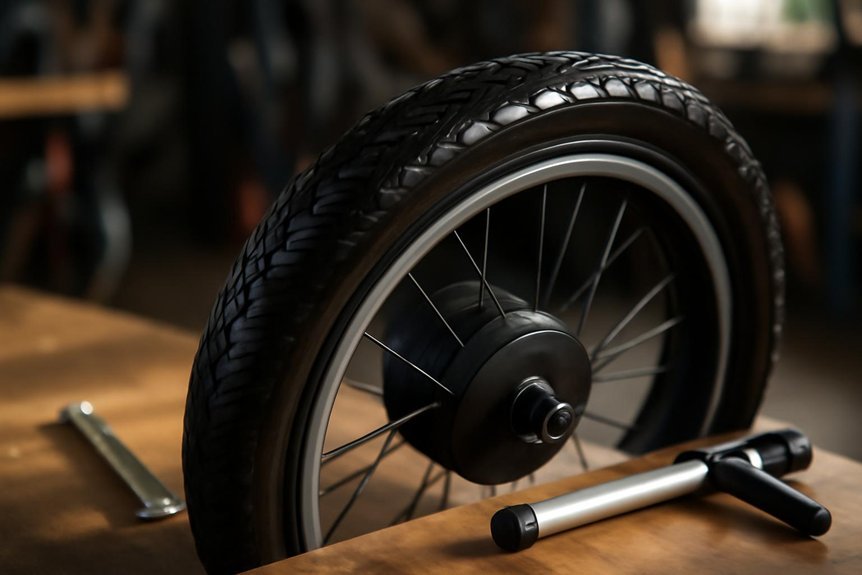
Installing e-bike tires might seem a bit daunting at first, but trust me, it’s really just a few simple steps that anyone can master — even if you’re not a seasoned bike mechanic. Picture this: it’s a sunny Saturday morning, and you’ve decided to give your trusty e-bike a little TLC. You gather your basic tools — a pair of tire levers and a pump — and realize you don’t need to lug around a toolbox the size of a small car.
As you roll up your sleeves, you take a moment to appreciate the adventure ahead. First, you’ll need to remove the old tire, and you might find yourself reminiscing about all those rides you’ve taken — the wind in your hair, the thrill of the open road. With a gentle nudge and a few strategic pulls, the old tire comes off, revealing the rim that’s been with you through thick and thin.
Now it’s time to put the new tire on, and you can almost feel the excitement bubbling up. You might be wondering how to make sure it fits just right — after all, a snug fit is crucial for a smooth ride. As you work the tire onto the rim, you remember a friend who once struggled with this very task, and it brings a smile to your face.
With a little patience and some careful adjustments, you complete the installation, feeling a sense of accomplishment wash over you. You step back, admire your handiwork, and can’t wait to take your e-bike out for a spin. So, let’s dive into the nitty-gritty and get that tire on — your next adventure awaits!
Understanding E-Bike Tire Specifications
When it comes to choosing tires for your e-bike, understanding the specifications can feel a bit like decoding a secret language.
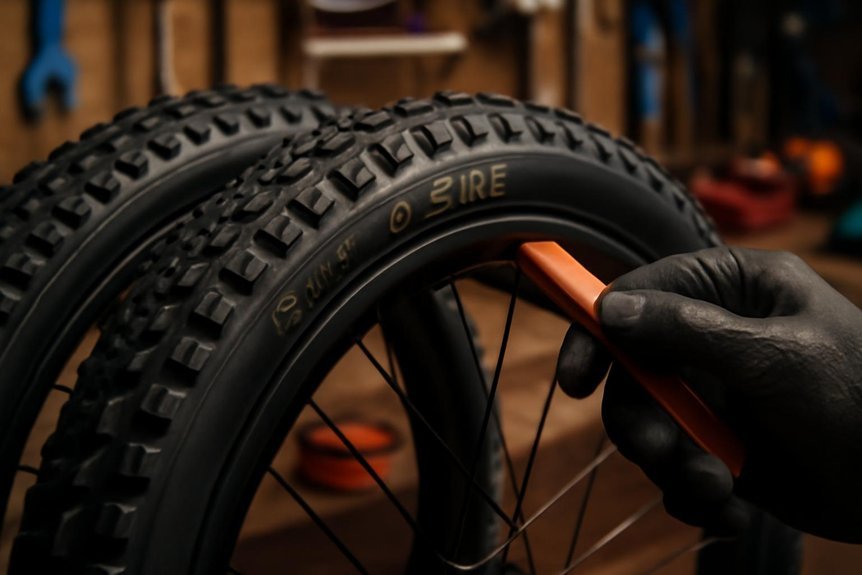
You’ll encounter numbers and letters that tell you everything from size to tread type. For instance, the tire width affects how your e-bike handles on different surfaces. A wider tire gives you better traction but may slow you down.
Don’t forget the pressure range, usually printed on the side; it’s essential for ideal performance. A tire that’s too soft or hard can lead to a bumpy ride or even a flat.
Finally, consider the tread pattern. Smooth treads are great for pavement, while knobby ones are perfect for off-road adventures.
Choose wisely, and your rides will be smooth sailing!
Essential Tools for Tire Installation
Installing e-bike tires can be a lot smoother if you’ve got the right tools on hand.
First up, you’ll need tire levers. These handy gadgets help you pry the tire off the rim without damaging anything.
Next, grab a good quality pump. You want one that can handle both Presta and Schrader valves, so you’re covered no matter what.
A patch kit or spare tubes is also essential, just in case you run into a pesky flat.
Don’t forget a torque wrench; it’ll help you tighten bolts to the correct specifications.
Finally, some rags for cleaning up any mess or dirt can be super useful.
With these tools, you’re ready to tackle tire installation like a pro!
Preparing Your E-Bike for Tire Replacement
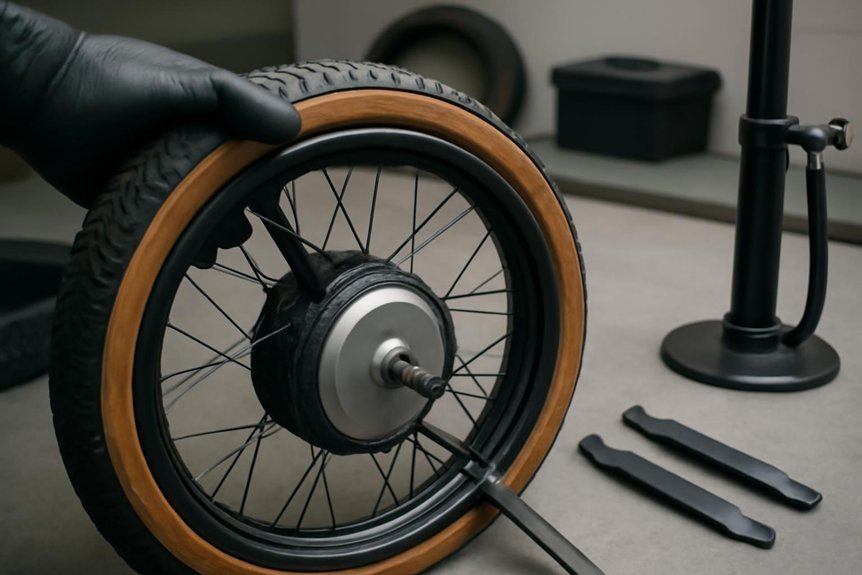
Before you get your hands dirty with tire replacement, you’ve got to prepare your e-bike. Start by finding a safe and spacious area to work, so you won’t be tripping over anything.
Make sure your bike is on a stable surface—no one wants it tipping over! Next, check your battery and remove it if possible; this keeps everything safe while you’re working.
You should also inspect your wheels for any damage or debris. It’s like giving your bike a little spa day!
Finally, gather all your tools in one spot, so you won’t be fumbling around later. With everything ready, you’re all set to tackle that tire replacement like a pro!
Removing the Old Tires
Now that you’re all set, it’s time to remove those old tires! First, make sure you’ve got your tire levers handy.
Start by deflating the tire completely; this makes it much easier to work with. Next, insert one tire lever between the rim and the tire, and gently pry the tire away from the rim. You might need a second lever to help.
Once one side’s off, pull the tire off completely. Don’t forget to check for any debris or damage to the tire before tossing it away.
If you’re struggling, take a deep breath and try again—patience is key! With a little practice, you’ll be a pro at this in no time!
Inspecting and Cleaning the Wheel Rims
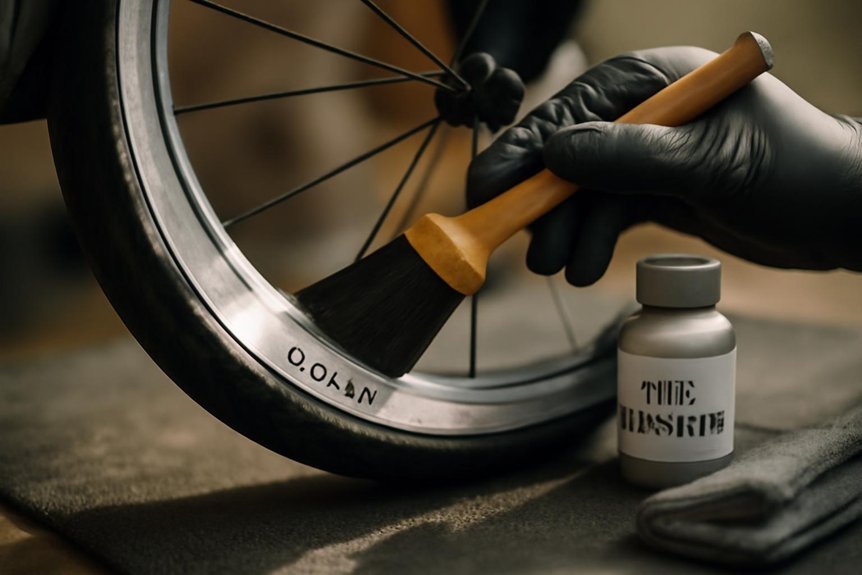
Once you’ve got those old tires off, it’s time to take a close look at your wheel rims. Check for any dents, cracks, or rough spots that could affect your new tires. A smooth rim surface is crucial for a good fit and safe ride.
If you spot any dirt or grime, grab a soft cloth or sponge and some soapy water. Gently scrub the rims to remove any debris. Don’t forget to rinse and dry them thoroughly—nobody likes soggy rims!
While you’re at it, inspect the rim tape. If it’s damaged, replace it to prevent air leaks. Taking this time to clean and inspect your rims will help guarantee your e-bike runs smoothly, so you can enjoy the ride ahead!
Installing the New Tires
Get ready to give your e-bike a fresh new look by installing those shiny new tires!
First, place the tire on the rim and make certain it’s facing the right direction; most tires have a little arrow indicating this.
Next, push one side of the tire bead into the rim. It can be a bit tricky, but don’t worry!
Once that’s done, work the other side of the bead into the rim, using your hands or tire levers if needed. Just be gentle to avoid damaging the tire.
After both sides are in, give the tire a little spin to verify it’s seated properly.
Now, you’re one step closer to hitting the roads with your upgraded ride!
Inflating the Tires to the Correct Pressure
After you’ve got those new tires snugly fitted on your e-bike, it’s time to pump them up!
First, check the side of the tire for the recommended pressure range, usually listed in PSI. Grab your pump, and make sure it’s compatible with your valve type—either Schrader or Presta.
Attach the pump securely, and start inflating. Keep an eye on the pressure gauge to avoid over-inflating, which can lead to a bumpy ride or even a blowout. If you hear a hissing sound, you might need to adjust the valve.
Once you reach the ideal pressure, remove the pump and replace the valve cap.
Voila! Your e-bike tires are ready to roll, so let’s hit the road!
Aligning and Securing the Wheels
Now that your tires are inflated and ready to go, it’s time to align and secure those wheels properly.
First, check that the wheel is seated correctly in the dropouts. You want it snug, but not so tight that it’s impossible to adjust later. Once it’s in place, tighten the axle nuts or quick-release lever until they’re secure. Don’t overdo it, though; you don’t want to break anything!
Next, make certain the brakes line up with the wheel rim. Give the wheel a spin; it should move smoothly without wobbling. If it does, you might need to readjust.
Finally, double-check everything once more to verify it’s tight and ready for your next ride! Happy biking!
Testing the Installation
Before you hit the road, it’s essential to test your installation to confirm everything’s working smoothly. Start by spinning the wheels; they should rotate freely without any rubbing against the frame or brakes.
Next, check the tire pressure; a properly inflated tire helps with performance and safety. You can find the recommended pressure printed on the tire sidewall.
Then, hop on your e-bike and take it for a short ride. Listen for any unusual noises, and pay attention to how it feels. If you notice any wobbles or vibrations, don’t ignore them!
This test confirms your tires are ready for action, so you can ride with confidence and enjoy your adventure without worrying about your tires.
Happy riding!
Maintenance Tips for E-Bike Tires
Once you’ve tested your e-bike tires and are ready to roll, keeping them in tip-top shape is key to enjoying every ride.
First, check the air pressure regularly; under-inflated tires can wear out faster and affect your ride. Aim for the pressure recommended on the tire sidewall.
Next, inspect your tires for cuts or debris. If you spot something, remove it right away to prevent damage.
Don’t forget to rotate your tires periodically to guarantee even wear. Cleaning your tires with soapy water can help too; it removes dirt and grime.
Finally, consider replacing them when the tread wears down—better safe than sorry!
With these simple tips, you’ll keep your e-bike tires rolling smoothly for many adventures ahead!
FAQ
Can I Use Regular Bike Tires on My E-Bike?
1. Can I use regular bike tires on my e-bike?
Yes, you can use regular bike tires on your e-bike, but it’s not recommended.
2. What are the risks of using regular bike tires on an e-bike?
Regular bike tires may not handle the higher speeds and added weight of an e-bike, which can lead to decreased performance and safety.
3. What type of tires should I use for my e-bike?
It’s best to choose tires specifically designed for e-bikes, as they provide better durability and handling for the unique demands of electric biking.
4. How do e-bike tires differ from regular bike tires?
E-bike tires are built to support higher speeds, enhanced grip, and increased weight capacity, which regular bike tires may not offer.
5. Will using regular tires affect my e-bike’s performance?
Yes, using regular tires can negatively impact your e-bike’s performance by compromising traction, stability, and overall ride quality.
6. Can I get in trouble for using regular bike tires on an e-bike?
While you won’t face legal trouble, using inappropriate tires could lead to safety hazards and potential accidents.
7. Are there any benefits to using regular bike tires on an e-bike?
There are few benefits; however, if you’re using the e-bike for casual, low-speed rides, regular tires may suffice temporarily.
8. What factors should I consider when selecting e-bike tires?
Consider factors like tire width, tread design, and load capacity to ensure optimal performance and safety.
9. How often should I check my e-bike tires?
Regularly inspect your e-bike tires for wear and tear, ideally before each ride or at least weekly to ensure safety.
10. Can I mix e-bike and regular bike tires?
Mixing tire types is not advisable, as it can lead to inconsistent handling and performance issues on your e-bike.
How Often Should I Replace My E-Bike Tires?
FAQs on E-Bike Tire Replacement
1. How often should I replace my e-bike tires?
E-bike tires should generally be replaced every 1,500 to 2,000 miles. This interval may vary based on your riding conditions.
2. What factors influence tire replacement frequency?
Riding conditions such as terrain, weather, and how often you ride can affect tire wear. More challenging conditions may require more frequent replacements.
3. How can I tell if my e-bike tires need replacing?
Regularly inspect your tires for visible signs of wear, such as cracks, bulges, or insufficient tread. If you notice any significant damage, it’s time for a replacement.
4. What are the performance issues that indicate tire replacement?
Decreased traction, poor handling, or a noticeable decline in ride comfort can signal that your tires need to be replaced. These issues can compromise your safety as well.
5. Is it safe to ride with worn-out tires?
Riding on worn-out tires can be dangerous as it increases the risk of flats and reduces stability. It’s best to replace them as soon as you notice significant wear.
6. Can I mix different brands or types of tires on my e-bike?
It’s generally not recommended to mix different brands or types of tires, as they may have varying performance characteristics. For optimal safety and handling, use the same type and brand for both tires.
7. Do different e-bike types require different tire maintenance?
Yes, different e-bike types, such as commuter, mountain, or road e-bikes, may have specific tire maintenance needs. Always refer to your e-bike’s manual for guidance.
8. What should I do if I notice a flat tire?
If you experience a flat tire, inspect it for punctures or damage before deciding whether to repair or replace it. If the tire is significantly worn, replacement might be the better option.
9. How can I extend the life of my e-bike tires?
Proper inflation, regular maintenance, and avoiding rough terrain can help extend the life of your tires. Regularly rotating your tires may also reduce uneven wear.
10. Should I inspect my tires even if I haven’t reached the mileage limit?
Yes, it’s wise to check your tires regularly, even before reaching the mileage limit. Regular inspections can catch potential issues early and ensure safe riding conditions.
What Are the Signs of Tire Wear?
FAQs About Signs of Tire Wear
1. What does uneven tread indicate?
Uneven tread suggests that your tires may be misaligned or improperly inflated. This can lead to decreased stability and increased wear over time.
2. How can I identify visible cracks on my tires?
Inspect your tires regularly for any noticeable cracks or splits in the rubber. These cracks can compromise the tire’s integrity and lead to potential blowouts.
3. What is considered low tread depth?
Tread depth below 2/32 of an inch is considered low and indicates that the tires are worn out. Insufficient tread can significantly reduce traction, especially in wet conditions.
4. What are bulges on tires?
Bulges appear as swollen areas on the tire’s surface and often indicate internal damage. If you notice a bulge, it’s crucial to replace the tire immediately to prevent a blowout.
5. How can I tell if my bike feels unstable due to tire wear?
If you experience wobbling or difficulty steering, it may be a sign of tire wear or damage. An unstable ride can be dangerous, so it’s important to investigate further.
6. What unusual noises might indicate tire issues?
Hissing, thumping, or grinding noises while riding may signal tire problems. These sounds can indicate uneven wear or structural damage that requires attention.
7. How often should I check my tire condition?
It’s advisable to check your tire condition at least once a month or before long rides. Regular inspections can help you catch early signs of wear and maintain safety.
8. What should I do if I find signs of tire wear?
If you spot signs of wear, it’s best to consult a professional or replace the tires as needed. Timely action can prevent accidents and ensure optimal performance.
9. Can tire wear affect fuel efficiency?
Yes, worn tires can lead to decreased fuel efficiency. Poor traction and increased rolling resistance can cause your vehicle to consume more fuel.
10. Is it safe to ride on tires with visible wear?
Riding on tires with visible wear can be unsafe. It’s essential to replace worn tires to ensure your safety and the safety of others on the road.
Are E-Bike Tires Tubeless Compatible?
FAQs about E-Bike Tires and Tubeless Compatibility
1. Are all e-bike tires tubeless compatible?
No, not all e-bike tires are tubeless compatible. It’s important to check the specifications of each tire to confirm its compatibility.
2. What are the benefits of tubeless e-bike tires?
Tubeless e-bike tires offer reduced weight and a lower likelihood of flats. They can also provide better traction and a smoother ride.
3. How can I find tubeless-compatible e-bike tires?
Look for tires that specifically mention tubeless compatibility in their product descriptions. Manufacturers often label their tires accordingly.
4. Do I need special rims for tubeless e-bike tires?
Yes, your rims must support tubeless systems for proper installation and performance. Verify rim specifications before purchasing tires.
5. Can I convert my e-bike to use tubeless tires?
If your current tires and rims are compatible, you can convert your e-bike to tubeless. Additional components like sealant and tubeless valves will also be needed.
6. What should I know about installing tubeless e-bike tires?
Installation may require specific techniques and tools to ensure a proper seal. Following manufacturer guidelines is essential for successful setup.
7. How do tubeless tires affect e-bike performance?
Tubeless tires can enhance performance by providing lower rolling resistance and improved grip. This can lead to a better overall riding experience.
8. Are tubeless tires worth the investment for e-bikes?
Many riders find that the benefits of tubeless tires, such as fewer flats and improved ride quality, justify the investment. However, consider your riding style and conditions.
9. What maintenance do tubeless e-bike tires require?
Tubeless tires require periodic checks for sealant levels and occasional topping up. Regularly inspect for any signs of damage or leaks.
10. Can I use standard inner tubes with tubeless tires?
While you can use inner tubes with tubeless-compatible tires, it’s generally not recommended. Tubeless setups are designed to function without tubes for optimal performance.
How Do I Choose the Right Tire Tread Pattern?
1. What tire tread pattern is best for off-road riding?
Knobby treads are ideal for off-road conditions as they provide superior grip on uneven and loose surfaces. These patterns help maintain traction in mud, sand, and rocky terrains.
2. Which tire tread pattern should I choose for pavement?
For riding on pavement, smoother tread patterns are recommended to reduce rolling resistance. This can enhance speed and improve fuel efficiency on hard surfaces.
3. How does terrain affect tire tread choice?
The type of terrain you frequently ride on significantly influences your tire tread selection. For example, rocky trails require more aggressive treads, while smooth paths benefit from flatter designs.
4. What should I consider about my riding style when selecting tire tread?
Your riding style plays a crucial role in tread selection. If you prefer aggressive riding and tackling obstacles, choose a more rugged tread; for casual rides, a smoother tread may suffice.
5. Are there specific tread patterns for wet conditions?
Yes, certain tread patterns are designed to enhance performance in wet conditions, featuring deeper grooves that channel water away. Look for tires labeled as all-weather or wet-weather specific for optimal grip.
6. Can I use the same tire tread pattern for different conditions?
Using one tire tread pattern for varying conditions may compromise performance. It’s advisable to switch tires based on the predominant riding conditions for the best results.
7. What are the benefits of using knobby tires?
Knobby tires provide excellent traction and stability on loose surfaces. Their design allows for better control and maneuverability when riding on trails or rough terrains.
8. How do tread patterns affect tire lifespan?
Tread patterns can influence the wear rate of a tire. More aggressive treads may wear faster on paved surfaces, while smoother treads can last longer in those conditions.
9. Should I consider tire width along with tread pattern?
Yes, tire width can complement tread pattern choice. Wider tires often provide increased stability and traction, especially in off-road situations, while narrower tires can enhance speed on pavement.
10. What is the impact of tire pressure on tread performance?
Tire pressure affects how the tread interacts with the surface. Proper inflation ensures optimal tread contact and performance, helping to maintain grip and reduce wear.
11. How often should I evaluate my tire tread pattern?
Regularly check your tire tread pattern, especially before long rides or changing seasons. This helps ensure you have the right tires for current conditions and can prevent safety issues.
Final Thoughts
Now that you’ve tackled installing your e-bike tires, you’re ready to hit the road! Remember, a smooth ride starts with well-installed tires, so keep an eye on them and check the pressure regularly. If you run into any bumps along the way, don’t hesitate to revisit the steps. With a little practice, you’ll be a pro at tire changes in no time. So, gear up and enjoy your next adventure on two wheels!