
Can You Ride an E-Bike in the Rain?
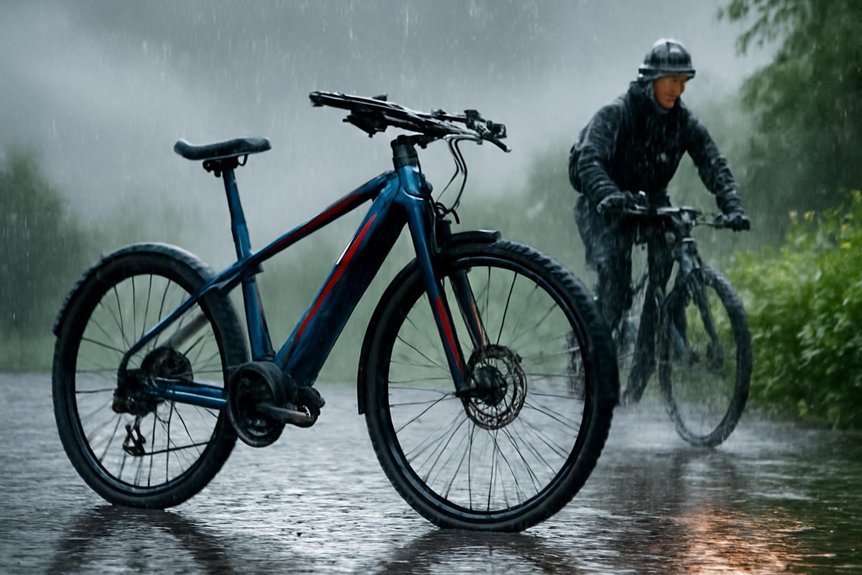
So, you’re wondering if you can ride your e-bike in the rain? Picture this: it’s a drizzly Saturday morning, and you’ve got that itch to explore your neighborhood. The good news is, yes, you can ride your e-bike in the rain! E-bikes are designed to handle a bit of water, much like your favorite waterproof jacket that keeps you dry on those soggy days.
However, it’s not just about hopping on and pedaling away into the downpour. Imagine gliding through puddles, but then you remember your tires—those trusty rubber companions. Are they suited for wet roads? You might recall the last time you rode in rain; the grip was wobbly, and you had to maneuver carefully.
And then there’s the braking technique. Remember that time you had to brake suddenly on a slick surface and your heart raced? It’s crucial to adjust your approach in the rain; gentle, gradual stops can make a world of difference.
Let’s not forget about visibility. As you pedal through the mist, you’ll want to ensure you’re seen by other road users. Think back to that one ride when you realized your lights were barely flickering. A quick check before you head out can save you from a close call.
So, if you’re curious about how to stay safe and enjoy the ride, let’s dive into some tips that will keep your adventures in the rain both thrilling and secure!
Understanding E-Bike Components and Water Resistance
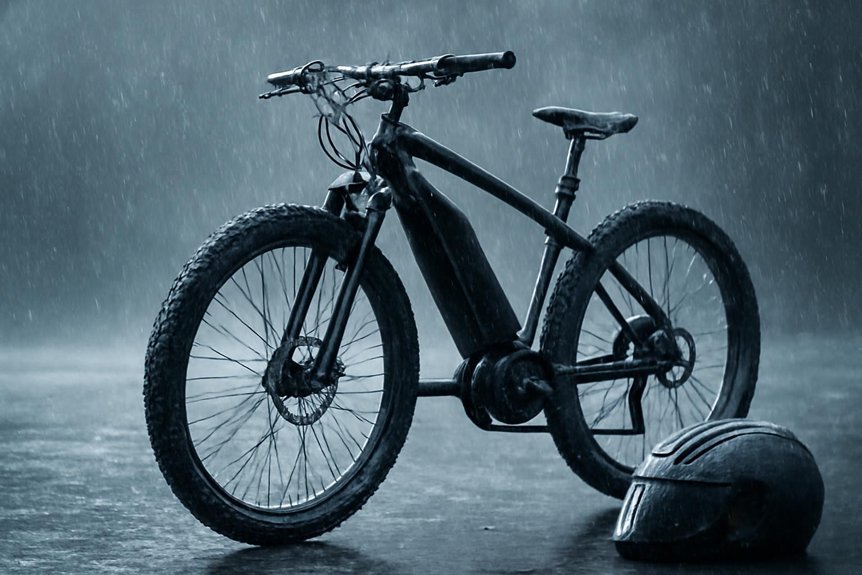
When you’re thinking about riding your e-bike in the rain, it’s important to know a bit about its components and how they handle water. Most e-bikes come with water-resistant features, but that doesn’t mean they’re completely waterproof.
The battery and motor are usually encased in protective housing, which helps keep them safe from splashes. However, you should still avoid submerging them.
The electronics, like the display and wiring, often have seals to prevent moisture damage, but they need checking regularly.
Don’t forget about the brakes! Good brakes are essential in wet conditions, ensuring you stop safely.
The Importance of Tires for Wet Weather
Tires are like the shoes of your e-bike—they’re essential for keeping you safe and steady, especially when it’s wet outside.
When the rain hits, having the right tires makes all the difference. They’re designed to grip the road better, preventing slips and slides. You wouldn’t want to wear flip-flops in a downpour, right?
The tread pattern on your tires helps channel water away, giving you better traction. Plus, wider tires can float over puddles, making your ride smoother.
If your tires are worn out, they’re less effective in rainy conditions, so checking their condition is a must.
Riding Techniques for Rainy Conditions
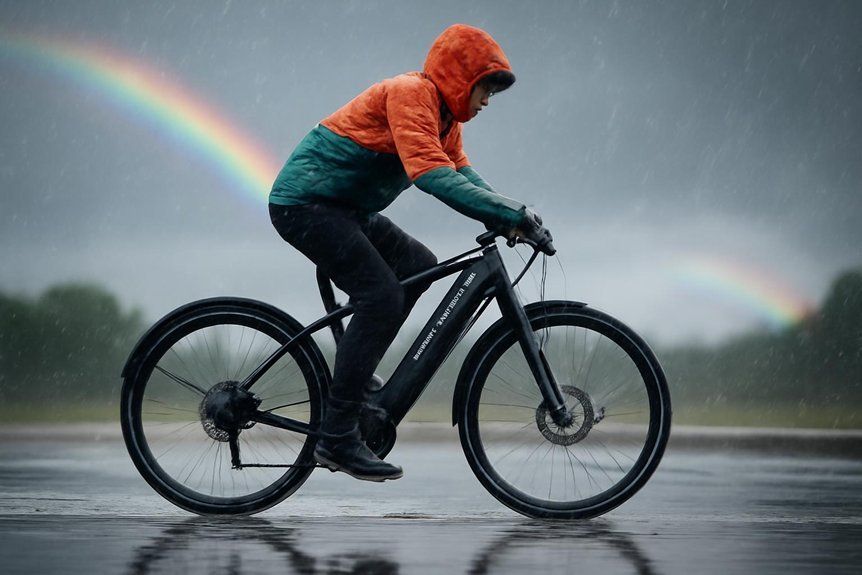
Riding an e-bike in the rain can be a thrilling experience, but it definitely requires some adjustments to keep you safe and in control.
First, you’ll want to slow down a bit. Wet surfaces can be slippery, so it’s essential to give yourself plenty of stopping distance. Use both brakes gently, as sudden stops might send you skidding.
Keep your body relaxed to help absorb bumps, but stay alert for puddles that could hide potholes. Lean slightly into turns to maintain balance and traction.
Also, remember to shift your weight back when going downhill to keep the front wheel stable.
With these techniques, you can glide through the rain, feeling like a biking superhero instead of a soggy mess!
Visibility and Lighting Considerations
Although you might love the thrill of splashing through puddles, visibility becomes a real challenge when it rains. Rain can blur your vision and reduce the brightness of your surroundings.
To stay safe, make sure your e-bike’s lights are working properly. A bright front light helps you see where you’re going, while a red rear light makes you visible to others.
Don’t forget to use reflective gear or stickers; they can make a huge difference. If it’s really pouring, consider waiting it out—better safe than sorry!
Remember, when visibility drops, so does the fun. Riding in the rain can be exciting, but you’ve got to be smart about it.
Stay bright, stay dry, and enjoy the ride!
Appropriate Clothing and Gear for Rain Riding
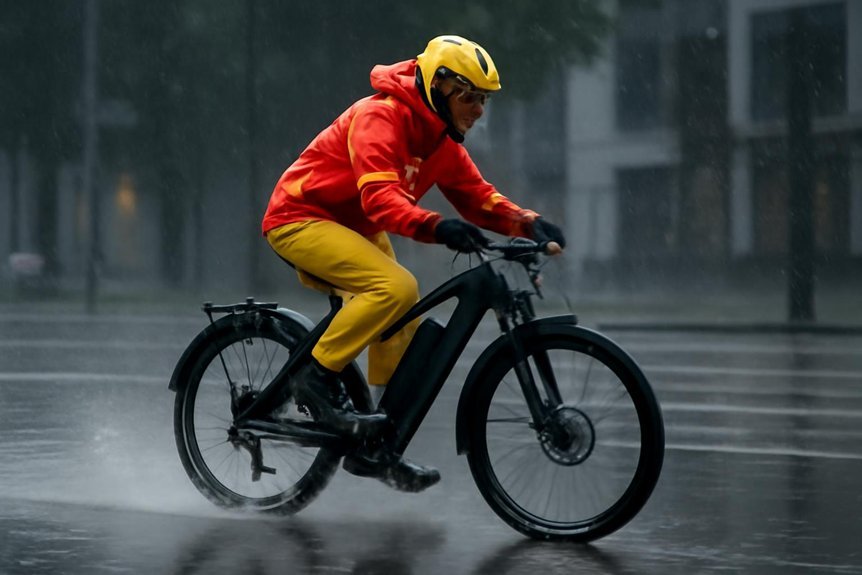
When the rain starts pouring, it’s essential to gear up properly so you can stay comfortable and safe on your e-bike.
First, wear a waterproof jacket to keep your upper body dry. Look for one with ventilation to avoid feeling like a sweaty sponge!
Don’t forget your legs—waterproof pants are a must. A good pair of waterproof gloves will keep your hands warm and dry, making it easier to grip the handlebars.
If you’ve got them, use shoe covers to protect your feet, too.
Finally, remember a helmet with a visor to shield your eyes from the rain.
With the right clothing and gear, you’ll feel ready to tackle those wet rides like a pro!
Maintenance Tips for E-Bikes Exposed to Moisture
Keeping your e-bike in top shape is essential, especially after a wet ride. First, dry off your bike as soon as you can. Use a soft cloth to wipe down the frame and components, paying extra attention to areas where water can hide.
Next, check your brakes; moisture can reduce their effectiveness. If they feel spongy, it’s time to adjust or replace them.
Don’t forget the chain! Clean and lubricate it to prevent rust and keep it moving smoothly.
Finally, inspect your battery and electrical connections. Water can cause issues here, so make certain everything’s dry and secure.
Choosing the Right E-Bike for Rainy Weather
After ensuring your e-bike is ready to tackle wet conditions, it’s time to think about choosing the right one for those rainy rides.
Look for e-bikes with good fenders to keep water from splashing up on you. Tires with deeper treads can provide better grip on slick surfaces, making your ride safer.
Consider models with sealed electrical components, as they can withstand moisture better. Some e-bikes even come with built-in lights, which are super handy when it’s gloomy outside.
And remember, a comfortable saddle will make your ride more enjoyable, even when it’s drizzling.
Navigating Puddles and Other Hazards
As you venture out on your e-bike during rainy days, traversing puddles and other hazards can feel like a fun challenge, almost like riding through a mini obstacle course!
When you spot a puddle, don’t just plow through it. Instead, keep your speed steady, and try to ride around it if you can. Hidden rocks or deep holes may lurk beneath the surface.
Watch out for slippery manhole covers or wet leaves, too; they can send you sliding if you’re not careful. Use your body to balance, leaning slightly as you navigate tricky spots.
And remember, your brakes might act differently when wet, so give yourself extra space to stop. Stay alert, and enjoy the ride!
Adjusting Your Route for Wet Conditions
When riding your e-bike in the rain, it’s smart to think about changing your route. Wet roads can be slippery, so you might want to avoid steep hills or winding paths. Instead, stick to well-paved paths that drain water better.
If possible, choose routes with more shelter, like tree-lined streets or covered bike lanes, to shield yourself from the worst of the rain. You should also consider lighter traffic areas since drivers mightn’t see you as clearly when it’s wet.
Always check the weather forecast too! If a storm’s brewing, you might want to stay close to home. A little planning can make your ride safer and more enjoyable, even when the skies are gloomy!
Staying Safe With Traffic and Road Conditions
While it might be tempting to zip through puddles on your e-bike, staying safe with traffic and road conditions is super important, especially in the rain.
First, always keep an eye out for cars and be extra cautious at intersections. Wet roads can be slippery, so brake gently to avoid skidding.
It’s also wise to ride defensively; sometimes, drivers don’t see you, so make your presence known. If visibility’s low, don’t hesitate to wear bright colors or use lights.
Potholes and debris can hide in puddles, so steer clear when possible.
Finally, if the rain’s really pouring, consider waiting it out. Your safety’s the priority, and a little patience goes a long way.
Happy riding!
Benefits of Riding an E-Bike in the Rain
Riding an e-bike in the rain can actually be a lot of fun, especially if you enjoy a little adventure. You’ll experience nature up close, feeling the cool droplets on your face while you zip through puddles like a kid again.
Plus, the rain can clear the trails, giving you a peaceful ride without the usual crowds. E-bikes are designed to handle wet conditions, so you won’t have to worry too much about slipping. The extra boost from your e-bike makes it easier to navigate slick roads, helping you stay balanced.
And hey, when you arrive at your destination, you can proudly say you braved the elements! Just don’t forget your rain gear; nobody wants to look like a drenched cat!
FAQ
Can I Wash My E-Bike After Riding in the Rain?
1. Can I wash my e-bike after riding in the rain?
Yes, you can wash your e-bike after riding in the rain to remove dirt and debris.
2. What precautions should I take when washing my e-bike?
Be cautious around electrical components and avoid using high-pressure water, as it can damage sensitive parts.
3. How should I dry my e-bike after washing?
Ensure that the bike dries completely to prevent rust and damage to components.
4. Is it safe to use a hose to wash my e-bike?
You can use a hose, but keep the water pressure low to avoid forcing water into electrical areas.
5. Should I remove the battery before washing?
It’s a good practice to remove the battery before washing to protect it from water exposure.
6. Can I use soap when washing my e-bike?
Yes, using mild soap is acceptable, but avoid harsh chemicals that could harm the bike’s finish or components.
7. How often should I wash my e-bike after rainy rides?
It’s advisable to wash your e-bike after every rainy ride to maintain its condition and performance.
8. What parts of the e-bike should I avoid getting wet?
Avoid getting water into the motor, battery compartment, and electronic displays to prevent damage.
9. Is it necessary to lubricate after washing?
Yes, after washing and drying, it’s important to lubricate the chain and other moving parts to ensure smooth operation.
10. What should I do if water gets into electrical components?
If water does get into electrical components, allow them to dry completely before attempting to use the bike again.
Will Rain Damage My E-Bike’s Battery?
FAQ 1: Can rain damage my e-bike’s battery?
Rain typically does not damage e-bike batteries because they are designed to resist moisture.
FAQ 2: Should I worry about my e-bike battery in wet conditions?
While e-bike batteries are moisture-resistant, it’s important to keep connections dry to ensure optimal performance.
FAQ 3: Is it safe to ride my e-bike in the rain?
Yes, riding in the rain is generally safe, but avoid heavy downpours and deep puddles that could submerge the battery.
FAQ 4: How can I protect my e-bike battery from moisture?
To protect your battery, make sure all connections are dry and consider using a waterproof cover while riding in the rain.
FAQ 5: What happens if my e-bike battery gets wet?
If your battery gets wet but does not submerge, it should operate normally. However, ensure it dries out before charging.
FAQ 6: Can I charge my e-bike battery if it got wet?
You should not charge a wet battery. Allow it to dry completely before connecting it to a charger.
FAQ 7: What should I do if my e-bike battery gets submerged in water?
If your battery is submerged, immediately remove it and allow it to dry completely before attempting to use or charge it.
FAQ 8: How can I extend the life of my e-bike battery in wet conditions?
To extend battery life, keep it dry, avoid prolonged exposure to moisture, and store it in a cool, dry place when not in use.
FAQ 9: Are there specific battery types more resistant to rain?
Most lithium-ion batteries used in e-bikes are designed to handle moisture, but always refer to the manufacturer’s guidelines for specific models.
FAQ 10: What maintenance should I perform on my e-bike battery after riding in the rain?
After riding in wet conditions, check the battery connections for moisture and wipe them dry. Regularly inspect the battery for any signs of water ingress.
How Can I Store My E-Bike Safely During Rain?
1. What is the best place to store my e-bike during rain?
The best place to store your e-bike during rain is indoors or under a waterproof cover. This helps protect it from moisture and potential damage.
2. Should I remove the battery when storing my e-bike in the rain?
Yes, you should always remove the battery before storing your e-bike in the rain. Ensure the battery is dry to prevent any moisture-related issues.
3. Can I leave my e-bike outside during rain?
It’s not advisable to leave your e-bike outside during rain. Moisture can accumulate and cause damage to the electrical components and frame.
4. What type of cover should I use for my e-bike?
Use a waterproof cover specifically designed for bicycles. This will provide adequate protection against rain while allowing some breathability to prevent condensation buildup.
5. How can I dry my e-bike after it gets wet?
Gently wipe down the frame and components with a soft cloth. If necessary, you can use a fan or let it air dry in a well-ventilated area.
6. Are there specific areas of the e-bike that need extra protection?
Yes, focus on protecting the battery compartment and electrical connections, as these areas are more susceptible to moisture damage.
7. What should I do if my e-bike gets soaked in the rain?
Immediately dry off the bike with a towel and inspect for any water in the battery compartment or other critical areas. Allow the bike to dry completely before using it again.
8. Can I use a regular bike cover for my e-bike?
While you can use a regular bike cover, ensure it is waterproof and fits snugly to prevent water from seeping in. Specialized e-bike covers may offer better protection for electrical components.
9. How often should I check my e-bike for moisture damage?
It’s a good idea to check your e-bike for moisture damage regularly, especially after rainy weather. Look for signs of corrosion or moisture in the battery and connection points.
10. What maintenance should I perform after storing my e-bike in rain?
After storing your e-bike in the rain, perform a thorough inspection of all components, paying close attention to the battery and electrical systems. Lubricate moving parts and clean any dirt or debris that may have accumulated.
Are There Any E-Bike Models Specifically Designed for Heavy Rain?
1. Are there e-bikes that can withstand heavy rain?
Yes, certain e-bike models are specifically designed to handle heavy rain conditions.
2. What features should I look for in a rain-resistant e-bike?
Look for water-resistant components, sealed wiring, and robust tires to ensure durability in wet conditions.
3. Which brands offer reliable e-bikes for wet weather?
Brands like Trek and Specialized provide e-bike options that are known for their performance in rainy environments.
4. Do I need to worry about electric components in the rain?
Yes, it’s important to choose e-bikes with sealed wiring to protect the electrical components from water damage.
5. Are there specific tires recommended for rainy conditions?
Yes, e-bikes with sturdy, grippy tires help improve traction on wet surfaces, enhancing safety and ride quality.
6. Can I use a regular e-bike in heavy rain?
While some regular e-bikes may perform adequately, those not specifically designed for rain may not offer the same level of protection and durability.
7. How can I maintain my e-bike after riding in the rain?
After riding in the rain, clean the bike to remove any debris and moisture, and consider applying a protective lubricant to the chain and other moving parts.
8. Do I need additional gear when riding an e-bike in heavy rain?
Yes, wearing waterproof clothing and using fenders can help keep you dry and enhance your overall riding experience in rainy conditions.
9. Are there any safety concerns when riding an e-bike in the rain?
Wet conditions can reduce traction and visibility, so it’s crucial to ride cautiously and be aware of slippery surfaces.
10. How does rain affect battery performance in e-bikes?
If properly sealed, the battery should be protected from moisture. However, it’s best to keep the battery dry to maintain its longevity and performance.
What Should I Do if My E-Bike Gets Soaked?
FAQs about Handling a Soaked E-Bike
1. What should I do immediately after my e-bike gets wet?
Dry your e-bike off right away using a soft cloth to prevent moisture from settling in.
2. Should I check the battery after my e-bike gets soaked?
Yes, inspect the battery for any signs of water damage to ensure it remains safe for use.
3. How can I tell if my e-bike’s electronics are damaged?
Look for corrosion, discoloration, or any visible water inside electronic components as indicators of damage.
4. Is it safe to use my e-bike right after drying it off?
No, ensure that all components are completely air-dried before attempting to use the e-bike again to avoid potential issues.
5. How long should I let my e-bike air dry?
It’s best to allow all parts to air dry for at least 24 hours to ensure thorough dryness.
6. Can I use a hairdryer to speed up the drying process?
Avoid using a hairdryer as the heat can damage sensitive components; air drying is the safest method.
7. What if I notice rust on my e-bike after it gets wet?
If rust appears, address it promptly by cleaning the affected areas and applying a rust inhibitor to prevent further damage.
8. Should I be concerned about my e-bike’s warranty after it gets wet?
Check your warranty policy regarding water damage, as some warranties may not cover damage caused by moisture.
9. How can I prevent my e-bike from getting soaked in the future?
Use a waterproof cover or park your e-bike in sheltered areas to protect it from rain and splashes.
10. What should I do if my e-bike won’t turn on after getting wet?
If the e-bike does not power on after drying, consult a professional technician to check for underlying issues.
Final Thoughts
So, riding an e-bike in the rain can be a blast if you take the right steps! Just remember to check your tires, keep your lights on, and ride carefully over slippery spots. With the right gear and a bit of caution, you can enjoy the fresh air and maybe even splash through a puddle or two! Embrace the adventure, and don’t let a little rain dampen your fun—just stay safe and enjoy the ride!