Hardtail Vs Full Suspension Emtb
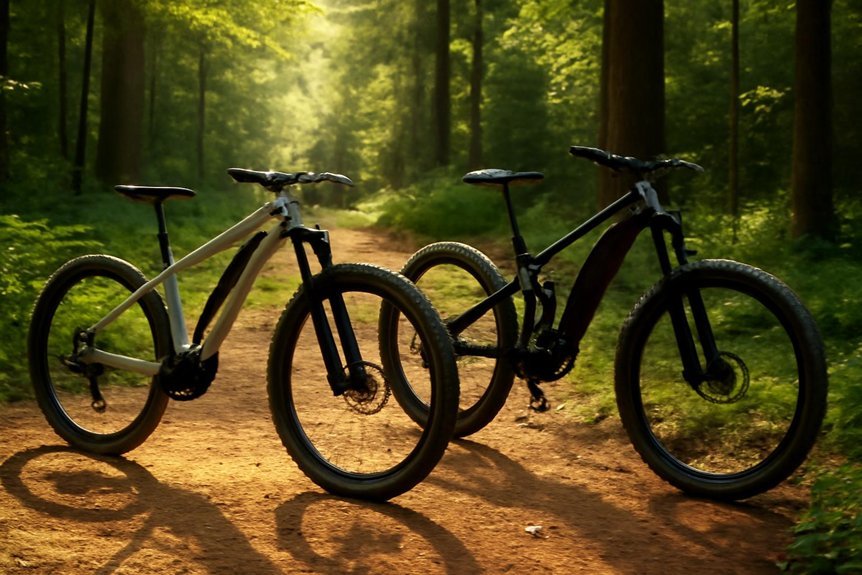
So, you’re thinking about the age-old debate of hardtail versus full suspension electric mountain bikes, huh? Picture this: you’re on a sun-soaked Saturday morning, the crisp air filling your lungs as you gear up for a day of adventure. You’ve got a decision to make, and both options have their charm.
Hardtails, with their lightweight frames, feel like a trusty friend ready to tackle those smooth, winding climbs. Remember that time you raced your buddy up a hill, the wind whipping past you? The hardtail’s snappy responsiveness made you feel like a champion, effortlessly gliding over the terrain. It’s perfect for those who love to feel every bit of the trail beneath them, embracing the thrill of the ascent.
On the flip side, imagine descending a rugged path, rocks and roots challenging your balance. A full suspension bike is like having a soft cushion beneath you, absorbing every bump and keeping you in control. There’s something magical about that feeling—like floating over the chaos of the trail while you focus on the view around you. Maybe it’s that moment you hit a jump and feel weightless for a split second, landing smoothly with a grin plastered across your face.
So, which bike is your perfect match for those unforgettable rides? Whether you lean toward the nimble hardtail or the plush full suspension, let’s dive deeper into what each can offer and help you find your adventure companion!
Understanding Hardtail Electric Mountain Bikes
When you hop on a hardtail electric mountain bike, you’re in for a thrilling ride that balances excitement and control.
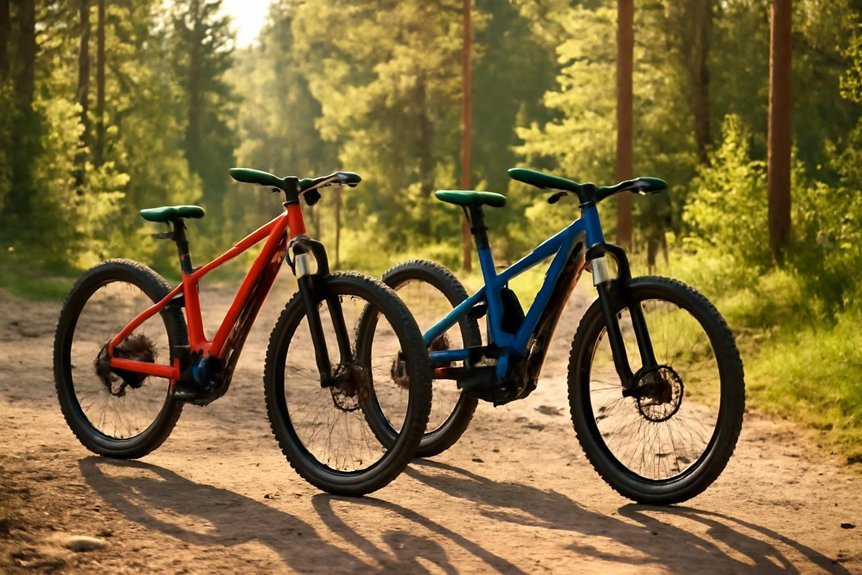
These bikes feature a sturdy frame and a front suspension, giving you a responsive feel while tackling trails. You’ll appreciate the lightweight design, which makes climbing hills easier and helps you maintain speed on flat sections.
Plus, hardtails are often more affordable and require less maintenance than full-suspension models. You’ll find that they excel on smooth terrain and can handle technical sections with skill.
Just remember, while you might bounce a bit on rough trails, the thrill of mastering your ride will keep you grinning.
Understanding Full Suspension Electric Mountain Bikes
If you’re ready to tackle the wildest trails, full suspension electric mountain bikes (EMTBs) might just be your new best friend.
These bikes feature both front and rear suspension, giving you a smoother ride over bumps and rocks. You’ll notice how they absorb shock, allowing you to maintain speed and control, even on the toughest paths.
Plus, with an electric motor boosting your pedaling, you can conquer those steep climbs with ease. Full suspension EMTBs are designed for adventure, making them perfect for tackling rugged terrain while keeping you comfortable.
They give you confidence to explore beyond your limits, and let’s be honest, there’s nothing quite like the thrill of flying down a trail, feeling like a superhero on wheels!
Weight and Efficiency Comparison
Comparing the weight and efficiency of hardtail and full suspension EMTBs can really help you figure out which bike suits your riding style best.
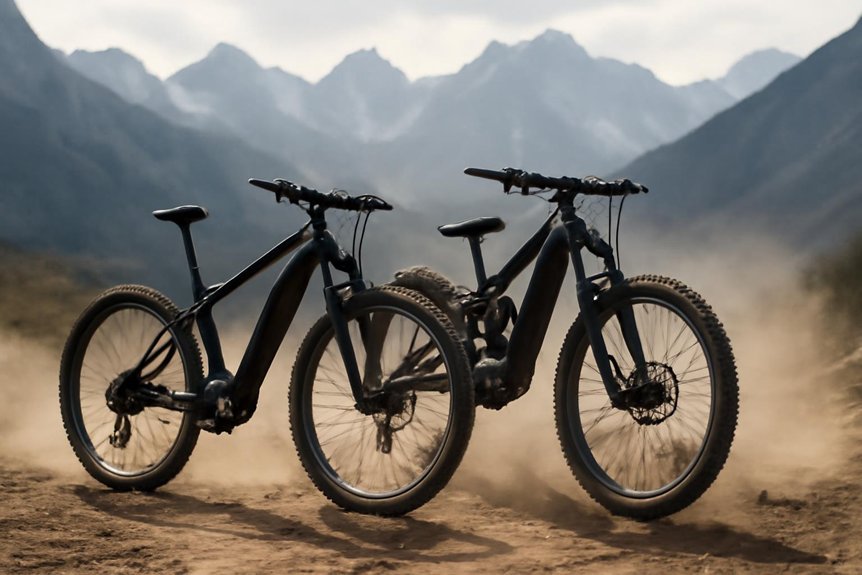
Hardtails are generally lighter, making them easier to pedal uphill, while full suspension bikes tend to be heavier due to their extra components. However, that extra weight can actually improve your downhill performance, giving you better control and comfort over rough terrain.
When it comes to efficiency, hardtails shine on smooth trails, allowing you to gain speed quickly.
But if you’re tackling rocky paths or bumpy trails, a full suspension bike can save energy by absorbing impacts.
Suspension Design and Performance
While you might think that all suspensions are created equal, the design of your EMTB’s suspension can greatly impact your ride.
Full suspension bikes feature both front and rear shocks, allowing for a smoother ride over rough terrain. This means you can tackle those gnarly bumps without feeling like you’re riding a jackhammer!
On the other hand, hardtails have a rigid rear, which can feel more efficient on smooth trails but might leave you bouncing on rocky paths.
Each design has its perks; full suspension offers comfort and control, while hardtails provide a more responsive feel.
Traction and Control on Varying Terrain
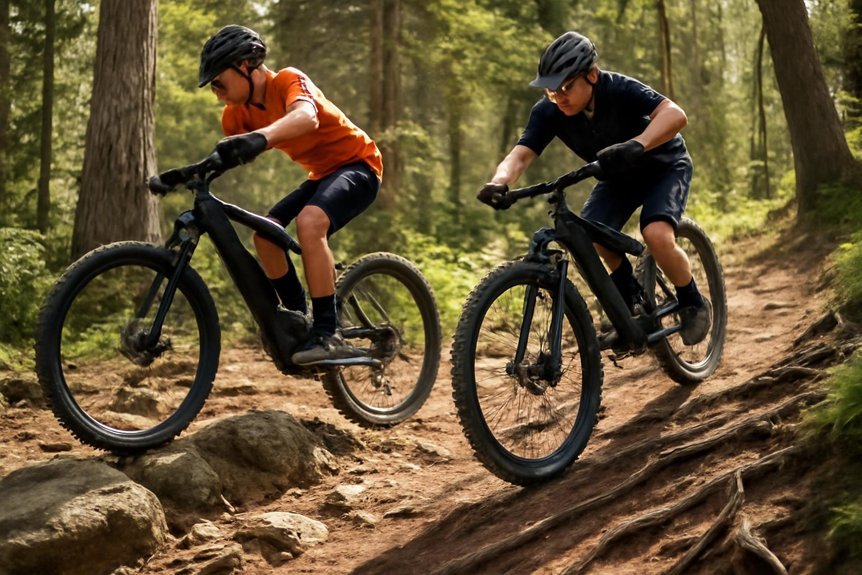
When it comes to tackling different terrains, traction and control play a big role in how your EMTB performs. If you’re riding on rocky paths or muddy trails, having the right bike can make a huge difference.
A hardtail offers a solid connection with the ground, allowing you to feel every bump and adjust your balance easily. However, a full-suspension bike can absorb shocks, giving you more grip on uneven surfaces.
Imagine zipping through a twisty forest trail—your choice of bike affects how confidently you navigate those tricky spots. You want to stay in control, right?
Climbing Ability: Hardtail Vs Full Suspension
If you’ve ever tackled a steep hill on your EMTB, you know that climbing ability can make or break your ride.
Hardtails excel when it comes to climbing because they’re lighter and more efficient. You can shift your weight easily, which helps maintain traction on those tough ascents.
On the flip side, full-suspension bikes offer more grip and control on rough terrain. The rear suspension absorbs bumps, keeping your wheels in contact with the ground. However, that extra weight can make climbing feel a bit sluggish.
Comfort and Ride Quality
After tackling those steep climbs, comfort and ride quality become the name of the game. You want a ride that cushions your bumps while keeping you in control.
Full suspension eMTBs excel here, absorbing shocks from rough trails and providing a smooth experience. You’ll feel like you’re gliding over obstacles instead of battling them.
On the other hand, hardtails are lighter and simpler, which can lead to a more connected feel with the trail. However, they mightn’t give you the same plush ride.
If you enjoy tackling technical descents, a full suspension bike might be your best bet. But if you prefer speed and efficiency on smoother paths, a hardtail could be your trusty companion.
Choose based on your comfort needs!
Maintenance and Durability
While both hardtails and full suspension eMTBs offer thrilling rides, their maintenance and durability can differ quite a bit.
Hardtails are generally easier to maintain since they’ve fewer moving parts. You won’t have to worry about complex suspension systems breaking down, which means less time in the shop and more time on the trails.
On the other hand, full suspension bikes provide a smoother ride but can require more upkeep. You’ll need to keep an eye on the shock and linkage systems, which can be a bit finicky.
Regarding durability, hardtails might withstand rough conditions better, while full suspension bikes excel in absorbing bumps.
Ultimately, your choice may depend on how much maintenance you’re willing to tackle!
Price Range and Value
When it comes to choosing between a hardtail and a full suspension eMTB, price range and value can really make a difference in your decision.
Hardtails typically cost less, making them a great choice for budget-conscious riders. With fewer moving parts, they’re easier to maintain, which adds to their overall value.
On the flip side, full suspension bikes usually come with a higher price tag, but they offer better comfort and control on bumpy trails. If you’re planning to ride frequently or tackle rough terrain, investing in a full suspension might be worth it.
Ultimately, think about how often you’ll ride and the type of trails you’ll tackle to find the best fit for your wallet and riding style.
Ideal Riding Conditions for Hardtails
If you’re looking to ride on smooth, well-maintained trails, a hardtail eMTB might just be your best buddy.
These bikes shine on dirt paths, gravel roads, and cross-country trails where the ground is relatively even. You’ll appreciate the efficient power transfer from the hardtail, allowing you to climb hills with ease. Plus, they’re lighter, making it easier to whip around those corners!
If you love speed and want to feel connected to the trail, hardtails are great for you. Just remember, they’re not the best choice for rough, rocky terrain or steep descents, where a little suspension can save your backside!
Ideal Riding Conditions for Full Suspension Bikes
For those who crave adventure on rough and bumpy trails, full suspension bikes are your go-to choice!
These bikes shine in challenging conditions, like rocky paths, steep descents, and root-filled terrains. They’ll absorb those jolts and bumps, giving you a smoother ride. If you plan to tackle mountain trails or hit those gnarly downhill sections, full suspension bikes are perfect.
They also excel in muddy and uneven conditions, where a hardtail might struggle. Plus, their design helps you maintain better traction, so you can tackle those tricky climbs with confidence.
Just remember, while they’re fantastic for rough rides, they can feel a bit sluggish on smooth paths. So, pick your trails wisely and enjoy the ride!
FAQ
Which Is Better for Beginners: Hardtail or Full Suspension?
1. What is a hardtail bike?
A hardtail bike features a front suspension and a rigid rear end, offering simplicity and lower maintenance compared to full suspension bikes. This design makes it an ideal choice for beginners.
2. Why is a hardtail bike good for beginners?
Hardtails provide better control on smoother trails due to their simpler design. They are also usually more affordable, allowing beginners to build their confidence without a significant investment.
3. What are the maintenance benefits of a hardtail bike?
Hardtails have fewer moving parts, which means less potential for mechanical issues and lower maintenance costs. This allows beginners to focus more on riding rather than repairs.
4. How does a hardtail bike perform on rough trails?
While hardtails can handle rough trails, they may not absorb bumps as effectively as full suspension bikes. Beginners may find this challenging initially, but it can also improve their riding skills.
5. Are hardtail bikes more affordable than full suspension bikes?
Yes, hardtail bikes are generally more budget-friendly than full suspension options. This affordability makes them a practical choice for beginners looking to get into mountain biking.
6. Will a hardtail bike help me build confidence as a rider?
Yes, riding a hardtail allows beginners to master bike handling on smoother terrains, fostering confidence. As skills improve, riders can tackle more challenging trails.
7. What type of terrain is best suited for a hardtail bike?
Hardtails excel on smooth, groomed trails, making them ideal for beginners who are just starting out. They can also handle moderate obstacles as riders gain experience.
8. Can beginners use a full suspension bike?
Yes, beginners can use a full suspension bike, but they may face a steeper learning curve due to the added complexity. These bikes are better suited for rough, technical terrain.
9. What should beginners prioritize when choosing a bike?
Beginners should prioritize comfort, control, and maintenance ease when selecting a bike. A hardtail often meets these needs effectively, making it a suitable choice.
10. How does riding a hardtail differ from riding a full suspension bike?
Riding a hardtail offers a more direct connection to the trail, which can enhance handling and feedback. In contrast, full suspension bikes provide increased comfort and control over rough terrain.
Can I Upgrade My Hardtail to Full Suspension Later?
1. Can I convert my hardtail mountain bike to full suspension?
Yes, it’s possible to convert a hardtail to a full suspension bike, but it requires significant modifications to the frame and components.
2. What factors should I consider before upgrading?
Consider frame compatibility, cost of new components, and the overall riding experience you wish to achieve with a full suspension setup.
3. Will my current hardtail frame support a full suspension upgrade?
Not all hardtail frames are designed for conversion; you will need to check the specifications and compatibility with suspension components.
4. How much will it cost to upgrade to full suspension?
The cost can vary widely based on the components selected, but expect to spend a significant amount on parts like the rear shock, linkage, and potentially a new frame.
5. Is it worth upgrading from hardtail to full suspension?
It depends on your riding style and terrain. Full suspension offers better comfort and control on rough trails, but it may not be necessary for all riders.
6. What components need to be replaced when upgrading?
You will typically need to replace the rear triangle of the frame, add a rear shock, and possibly upgrade the fork and other components for balance and performance.
7. Can I do the upgrade myself, or should I hire a professional?
If you have experience with bike maintenance, you may attempt the upgrade yourself, but hiring a professional is recommended to ensure proper installation and safety.
8. Will upgrading affect my riding performance?
Yes, upgrading to full suspension can enhance your performance on rough terrain by improving traction and reducing fatigue during long rides.
9. Are there any specific brands or models recommended for upgrades?
Research brands known for compatibility with your hardtail model, and consult with local bike shops for recommendations tailored to your needs.
10. What are the downsides of converting to full suspension?
Some downsides include increased weight, higher maintenance costs, and potentially less efficient pedaling on smooth terrain compared to a hardtail.
How Do Electric Assist Features Differ Between Bike Types?
FAQs about Electric Assist Features in Bikes
1. What is the main difference in electric assist systems between hardtail and full suspension eMTBs?
Hardtails typically feature simpler electric assist systems that prioritize range and efficiency. In contrast, full suspension eMTBs provide advanced options for a more adaptable riding experience.
2. How does torque sensing work in full suspension eMTBs?
Torque sensing measures the rider’s pedaling force and adjusts the electric assist accordingly. This allows for a more natural riding feel and enhanced control on challenging terrain.
3. What are the benefits of customizable modes in full suspension eMTBs?
Customizable modes enable riders to adjust the level of electric assistance based on the terrain and their personal preferences. This adaptability enhances the riding experience and can improve performance in various conditions.
4. Are electric assist features on hardtails limited to just efficiency?
While hardtails focus on efficiency, some models may still offer basic assist modes or features that enhance the riding experience. However, these systems will generally be less sophisticated than those found on full suspension eMTBs.
5. Can electric assist in hardtails handle rough terrain?
Hardtails can manage rough terrain, but their electric assist systems are not as advanced as those in full suspension eMTBs. Riders may find that they require more effort and control on uneven surfaces.
6. What role does range play in electric assist features for hardtails?
Range is a critical factor in hardtail eBikes, as these systems are designed to maximize battery life. Efficient use of energy allows riders to cover longer distances without frequent recharging.
7. Do full suspension eMTBs offer better handling compared to hardtails?
Yes, full suspension eMTBs generally provide better handling on rough terrain due to their advanced electric assist systems and suspension design. This combination allows for improved traction and stability.
8. Is it easier to ride uphill on a full suspension eMTB compared to a hardtail?
Full suspension eMTBs often make climbing easier due to their torque sensing and customizable modes, which adjust power output based on the rider’s input. This responsiveness helps maintain momentum on steep inclines.
9. What should riders consider when choosing between a hardtail and a full suspension eMTB?
Riders should consider their riding style, terrain preferences, and the level of electric assist features they desire. Full suspension eMTBs are ideal for those tackling rough trails, while hardtails suit more casual riders focused on efficiency.
10. Are there any drawbacks to the more advanced electric assist features in full suspension eMTBs?
While advanced features enhance performance, they may also increase the bike’s weight and complexity. Riders should weigh the benefits against potential maintenance and handling challenges.
What Are the Best Brands for Hardtail and Full Suspension EMTBS?
FAQs on the Best Brands for Hardtail and Full Suspension E-MTBs
- What are the top brands for hardtail E-MTBs?
- The leading brands for hardtail E-MTBs include Trek, Specialized, Cannondale, and Giant. Each brand is known for its innovative design and reliable performance.
- Which brands excel in full suspension E-MTBs?
- Trek, Specialized, Cannondale, and Giant also stand out in the full suspension category. They offer advanced suspension systems that enhance ride quality and control.
- How does Trek compare to other brands in E-MTBs?
- Trek is recognized for its cutting-edge technology and durability. Their E-MTBs are designed for a variety of terrains, making them suitable for different riding styles.
- What unique features does Specialized offer in their E-MTBs?
- Specialized E-MTBs often include proprietary suspension designs and powerful motors. They focus on delivering a smooth ride and maintaining traction on challenging trails.
- Are Cannondale E-MTBs suitable for beginners?
- Cannondale offers E-MTBs that are user-friendly, making them a great option for beginners. Their bikes combine ease of handling with solid performance.
- What makes Giant a popular choice for E-MTB riders?
- Giant is known for its value and quality, providing a range of E-MTBs that cater to different skill levels. Their bikes are engineered for stability and comfort on various terrains.
- Can I find E-MTBs for specific riding styles from these brands?
- Yes, each brand offers models tailored to different riding styles, from cross-country to downhill. It’s advisable to explore their catalogs to find the perfect match for your needs.
- Which brand provides the best warranty for E-MTBs?
- Warranty offerings can vary by model and region, but many brands, including Trek and Specialized, typically provide strong warranty options. Always check with the retailer for specific details.
- How do I choose between hardtail and full suspension E-MTBs?
- Choosing between hardtail and full suspension depends on your riding preferences. Hardtails are often lighter and more efficient for climbing, while full suspensions offer better control and comfort on rough trails.
- Are there budget-friendly options among these brands?
- Yes, all four brands offer a range of price points, including entry-level models. It’s worth researching their lower-end options if you’re on a budget while still wanting quality performance.
How Do I Choose the Right Size for My EMTB?
FAQ 1: How do I measure my inseam for an eMTB?
To measure your inseam, stand straight with your feet about shoulder-width apart. Use a measuring tape to measure from the ground up to the top of your inner thigh.
FAQ 2: Why is inseam measurement important for selecting an eMTB?
Inseam measurement helps determine the appropriate frame size, ensuring that you can comfortably reach the pedals and maintain proper riding posture.
FAQ 3: What is a manufacturer’s size chart?
A manufacturer’s size chart provides specific height and inseam ranges for each frame size, guiding you in selecting the right size eMTB.
FAQ 4: How can I find the right eMTB size for my height?
Refer to the manufacturer’s size chart, which typically lists recommended frame sizes based on your height. Cross-reference this with your inseam measurement for the best fit.
FAQ 5: What should I do if I fall between two sizes on the size chart?
If you fall between two sizes, consider your riding style and preferences. A smaller size may offer better maneuverability, while a larger size might provide more stability.
FAQ 6: Is it important to test ride different eMTB sizes?
Yes, test riding different sizes allows you to experience how each feels. Comfort and handling can vary, so personal experience is crucial in making the right choice.
FAQ 7: What should I look for during a test ride?
During the test ride, pay attention to your reach, saddle height, and overall comfort. Ensure you can easily control the bike without straining.
FAQ 8: How does riding style affect frame size selection?
Different riding styles, such as aggressive downhill or casual trail riding, may influence your size choice. For example, a more aggressive rider might prefer a slightly smaller frame for better control.
FAQ 9: What if I can’t test ride the bike before purchasing?
If you can’t test ride, rely heavily on the manufacturer’s size chart and read reviews from other riders with similar measurements. Consider purchasing from retailers with a good return policy.
FAQ 10: Can I adjust the fit of my eMTB after purchase?
Yes, many aspects of fit can be adjusted, such as the saddle height and handlebar position. However, choosing the correct frame size initially is still crucial for optimal comfort and performance.
Final Thoughts
So, whether you’re eyeing a hardtail or a full suspension EMTB, it really comes down to your riding style and the trails you love. Hardtails are perfect for those smooth climbs and quick rides, while full suspension bikes tackle rough terrain like a champ. Think about where you’ll ride most and what feels good to you. No matter which you choose, both can take you on some epic adventures—just remember to have fun out there!