
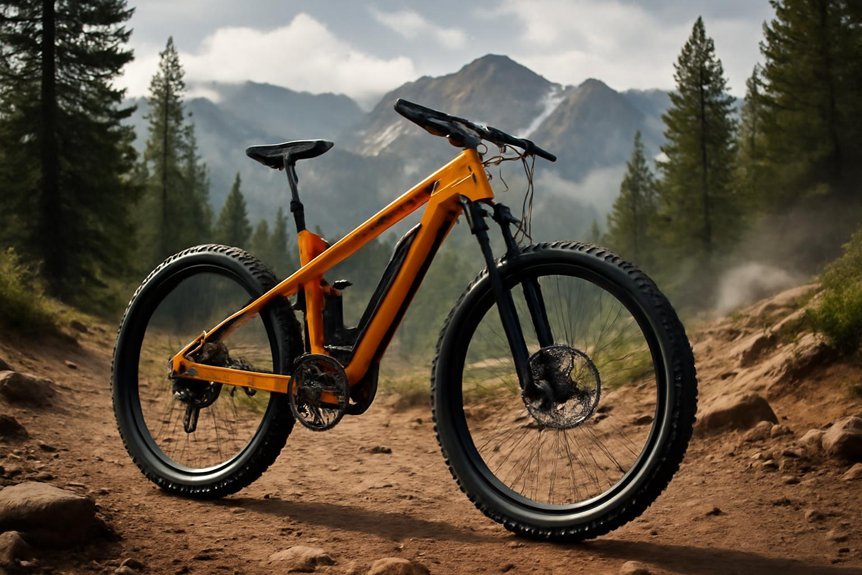
What Is an Electric Mountain Bike?
Have you ever found yourself struggling up a steep hill on a mountain bike, legs burning and heart racing, wondering if you’ll ever reach the top? Enter the electric mountain bike, or E-MTB, a game-changer for outdoor enthusiasts. Picture this: you’re cruising along a winding trail, and as you approach a daunting incline, instead of feeling that familiar sense of dread, you simply engage the electric motor and feel a gentle boost propelling you upwards. It’s like having a little helper by your side, making those tough climbs feel more like a breeze.
Perhaps you’ve seen a friend effortlessly gliding past you on a steep path, laughing and enjoying the ride. That’s the magic of E-MTBs! They allow you to tackle challenging terrains without the fear of exhaustion. Whether you’re a seasoned rider or just starting out, these bikes open up a world of adventure. So, if you’re curious about how they work and why they’ve captured the hearts of so many, stick around! There’s a lot more to explore about these incredible machines and the thrill they bring to mountain biking.
Understanding Electric Mountain Bikes
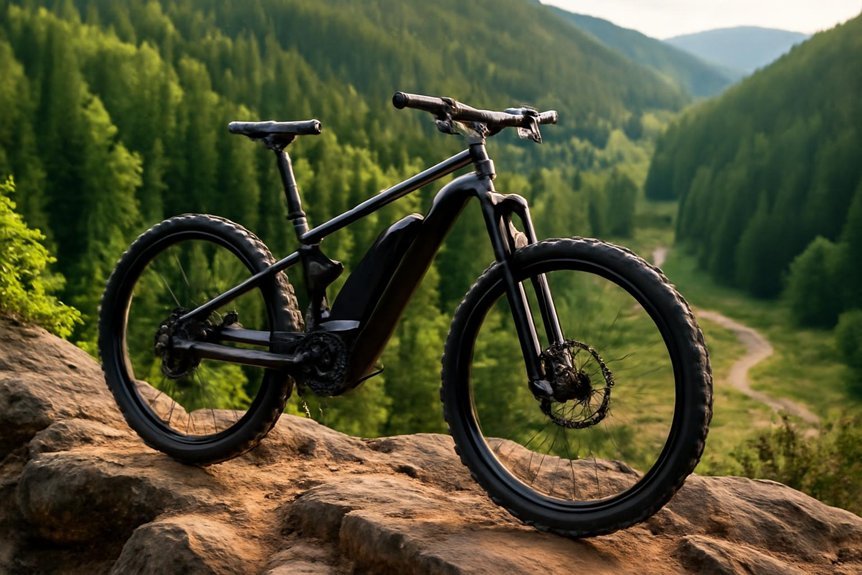
When you think about hitting the trails, electric mountain bikes (or e-MTBs) can take your ride to a whole new level.
These awesome bikes combine the thrill of mountain biking with a little help from an electric motor. Imagine zipping up steep hills or cruising over rough terrain without feeling completely wiped out!
E-MTBs provide extra power, so you can tackle those tricky paths with ease. They’re perfect for both beginners and experienced riders, making every adventure more exciting.
You’ll find yourself exploring trails that once seemed too challenging. Plus, they’re eco-friendly, so you can feel good about your ride.
When you hop on an e-MTB, you’re not just biking; you’re embracing a whole new way to explore the great outdoors!
Key Components of an E-Mtb
An electric mountain bike (e-MTB) is like a superhero version of a regular mountain bike, packed with cool components that make your ride smoother and more powerful.
At its heart is the motor, which gives you that extra boost when you’re climbing hills or zooming on trails. Then there’s the battery, powering the motor and allowing you to ride longer without breaking a sweat.
You’ll also find a controller, letting you choose how much assistance you want. The frame is designed to handle rough terrain, ensuring stability and control, while the tires offer grip and durability.
With these key components, your e-MTB transforms every ride into an adventure, making mountain biking more fun and accessible for everyone!
How Electric Mountain Bikes Work
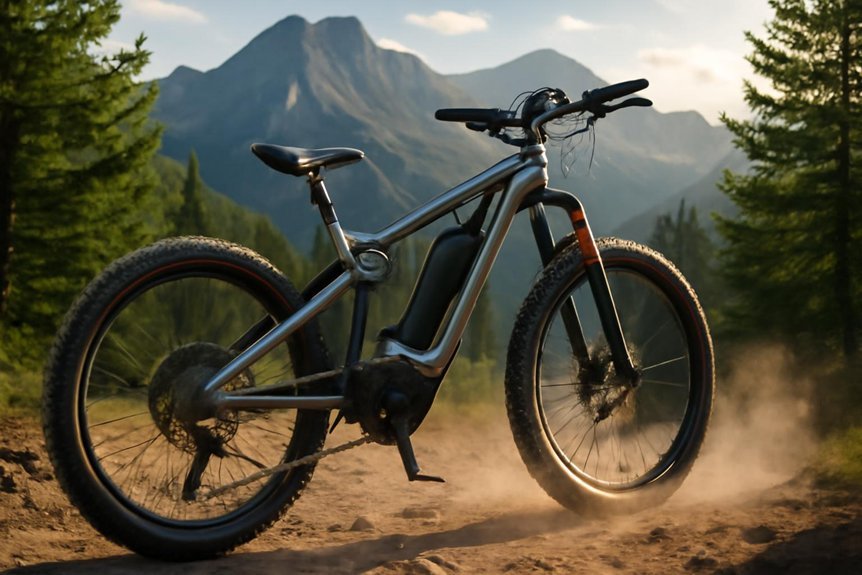
Electric mountain bikes work like a well-oiled machine, blending the power of a motor with the thrill of traditional biking. When you pedal, the bike’s sensors detect your effort and activate the motor accordingly, giving you a boost. This means you can tackle steep hills or rough terrain without feeling completely wiped out.
The battery, usually located on the frame, powers the motor, and you can recharge it easily at home. Most e-MTBs let you choose different levels of assistance, so you can adjust how much help you want.
With a sturdy frame and wide tires, these bikes are built to handle tough trails, making your rides more enjoyable and less exhausting. So, get ready to explore the great outdoors!
Benefits of Riding an Electric Mountain Bike
Riding an electric mountain bike opens up a world of fun and adventure that you mightn’t have thought possible.
Imagine zipping up steep hills without getting too tired or feeling like you’re going to need a nap afterward. With an e-MTB, you can explore trails that once seemed intimidating, giving you a confidence boost.
Plus, you get to enjoy the fresh air and stunning views while still getting a workout. You’ll appreciate the added help on those long rides, making it easier to keep up with friends.
And let’s be honest, who wouldn’t love the thrill of hitting those tricky trails with a little extra power? It’s a fantastic way to combine fitness and excitement!
Comparing E-Mtbs to Traditional Mountain Bikes
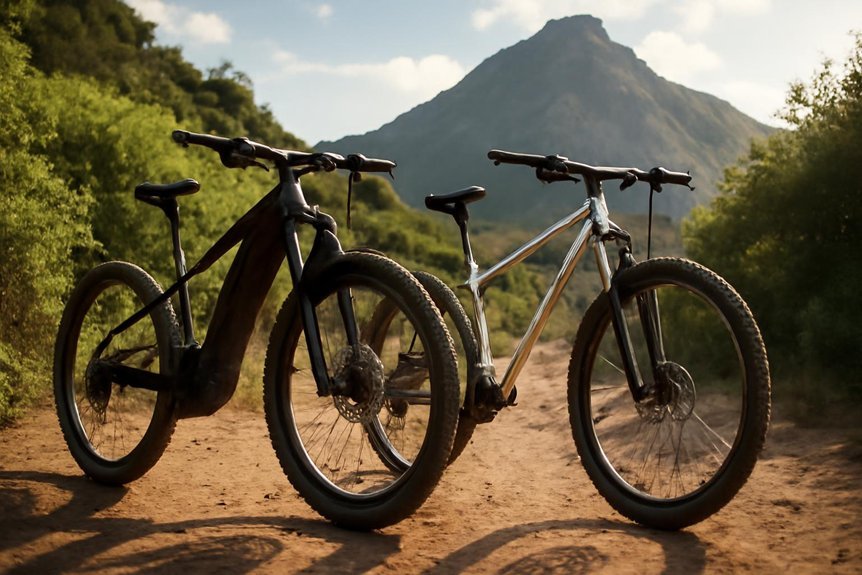
When you stack e-MTBs against traditional mountain bikes, you’ll find some exciting differences that can totally change your riding experience.
E-MTBs pack a powerful electric motor, giving you an extra boost on steep climbs. This means you can tackle tougher trails without feeling worn out, making your ride more enjoyable.
Traditional mountain bikes, on the other hand, rely solely on your pedal power, which means you get an excellent workout but may struggle on challenging terrain.
Plus, e-MTBs often come with features like pedal-assist modes, allowing you to choose how much help you want.
However, traditional mountain bikes are lighter and simpler to maintain.
Ultimately, it comes down to your riding style and what you want from your adventure!
Popular Types of Electric Mountain Bikes
There’s a whole world of electric mountain bikes (e-MTBs) out there, and each type offers something unique for your adventures!
You’ve got hardtail e-MTBs, which have a front suspension and are great for smoother trails.
Then there are full-suspension e-MTBs, perfect for tackling rough terrain, as they absorb shocks from both front and back.
If you’re looking for speed, check out the racing e-MTBs designed for quick rides and competitive fun.
For those who love a leisurely cruise, cruiser e-MTBs offer comfort with a relaxed riding position.
Finally, there are fat tire e-MTBs, ideal for snow or sand, giving you extra grip.
With so many options, you’ll find the perfect ride for your next trail adventure!
Choosing the Right Electric Mountain Bike
How do you choose the right electric mountain bike for your adventures?
First, think about where you’ll be riding. If you plan to tackle rocky trails, look for a bike with sturdy tires and good suspension.
Next, consider the motor power; a higher wattage means more assistance on steep hills. Don’t forget about battery life, too! You want a bike that can keep up with your rides.
Also, check the frame size to guarantee it fits you comfortably.
Finally, test ride a few models. It’s like dating; you need to find the right match!
So, get out there, have fun, and remember, the right electric mountain bike can make your adventures unforgettable!
Happy riding!
Maintenance Tips for Electric Mountain Bikes
Even though riding your electric mountain bike can be an exhilarating experience, keeping it well-maintained is key to guaranteeing every adventure goes smoothly.
Start by regularly checking your tire pressure, as proper inflation helps with handling and speed.
Don’t forget to clean the chain and gears; a little lubrication goes a long way in preventing rust and wear.
Inspect your brakes often to make certain they work effectively, especially before hitting those thrilling trails.
Charge the battery according to the manufacturer’s guidelines to prolong its life.
Finally, store your bike in a dry place to protect it from the elements.
With these simple maintenance tips, you’ll keep your e-MTB running like a dream, ready for your next ride!
Safety Considerations for E-Mtb Riders
When you hop on your electric mountain bike, safety should always be on your mind, especially as you tackle those thrilling trails.
First, wear a helmet—it’s your best friend when it comes to protecting your noggin!
Next, check your brakes and tires before each ride; a quick inspection can save you from nasty spills.
Keep your speed in check, especially on tricky terrain, and remember that the extra power from your e-bike can be tempting.
Stay aware of your surroundings, watch for obstacles, and don’t forget to signal when you’re turning.
Finally, consider wearing bright colors to make you more visible to others.
With a bit of caution and common sense, you’ll enjoy every ride safely!
The Future of Electric Mountain Biking
As you zip along those thrilling trails on your electric mountain bike, it’s exciting to think about where this sport is headed. The future looks bright, with advancements in battery technology making rides longer and more powerful.
Imagine cruising up steep hills without breaking a sweat! Plus, new designs are making bikes lighter and more agile, so you can tackle even the trickiest terrains.
More riders are joining the e-MTB community, which means more trails and events popping up just for you.
And let’s not forget about smart technology—think apps that help you track your rides or connect with other bikers.
The electric mountain biking world is evolving, and who knows what adventures await you in the years to come?
FAQ
Are Electric Mountain Bikes Legal on All Trails?
FAQ on Electric Mountain Bikes and Trail Regulations
1. Are electric mountain bikes allowed on all trails?
No, electric mountain bikes are not permitted on all trails. Regulations differ by location, so it’s essential to check specific trail rules.
2. How can I find out if electric mountain bikes are allowed on a particular trail?
You can find out by visiting the trail’s official website or contacting local authorities. Many trails post their regulations clearly for riders.
3. What factors influence the legality of electric mountain bikes on trails?
Factors include local laws, trail management policies, and environmental considerations. Each area may have different rules based on these elements.
4. Are there specific types of electric mountain bikes that are more likely to be allowed?
Typically, Class 1 electric mountain bikes, which provide assistance only while pedaling, are more likely to be permitted on trails. However, always verify with local regulations.
5. What are the consequences of riding an electric mountain bike on prohibited trails?
Riding on prohibited trails can lead to fines, injury, or damage to the trail environment. Additionally, it can create conflicts with other trail users.
6. Can I ride my electric mountain bike on multi-use trails?
It depends on the trail’s regulations. Some multi-use trails allow electric mountain bikes, while others may restrict them.
7. Is it necessary to wear a helmet while riding an electric mountain bike on trails?
While helmet laws vary by location, it is highly recommended to wear one for safety, regardless of legal requirements.
8. What should I do if I’m unsure about the rules regarding electric mountain bikes on a trail?
If unsure, it’s best to err on the side of caution and consult local trail guidelines or speak with park officials.
9. Are there any designated trails specifically for electric mountain bikes?
Yes, some areas have designated trails for electric mountain bikes. Researching local trail maps or websites can help you find these specific routes.
10. Can I modify my electric mountain bike to comply with trail regulations?
Modifications may be possible, but they must adhere to local laws and regulations. Always check what changes are permissible before making any modifications.
11. What is the best way to ensure I’m following the rules while riding an electric mountain bike?
Stay informed by regularly checking local regulations, trail conditions, and guidelines. Being proactive helps ensure a safe and enjoyable riding experience.
How Much Do Electric Mountain Bikes Typically Weigh?
FAQs about Electric Mountain Bike Weight
1. What is the typical weight range for electric mountain bikes?
Electric mountain bikes usually weigh between 40 to 70 pounds. The exact weight can vary based on the model and battery size.
2. Why does the weight of an electric mountain bike matter?
The weight of the bike can significantly impact handling and performance. Heavier bikes may be more challenging to maneuver, especially on steep terrains.
3. Do all electric mountain bikes weigh the same?
No, the weight can differ significantly from one model to another. Factors such as frame material, battery capacity, and additional features contribute to these variations.
4. How does battery size affect the weight of an electric mountain bike?
Larger batteries typically add more weight to the bike. Therefore, bikes with bigger battery capacities will generally be heavier than those with smaller batteries.
5. Can I expect lighter electric mountain bike models?
Yes, some manufacturers produce lightweight electric mountain bikes aimed at improving agility and handling. These models may weigh closer to the lower end of the spectrum.
6. What should I consider when choosing a weight for my electric mountain bike?
Consider your riding style, the terrain you’ll encounter, and how comfortable you are handling weight. A heavier bike may offer more stability, while a lighter bike can be easier to maneuver.
7. Is there a weight limit for electric mountain bikes?
While there isn’t a universal weight limit, it’s essential to check the manufacturer’s specifications. Each bike has a maximum load capacity that includes the rider and any gear.
8. How does the weight impact battery life?
Heavier bikes may require more energy to operate, potentially affecting battery life. However, the overall efficiency will also depend on motor power and riding conditions.
9. Are electric mountain bikes heavier than traditional mountain bikes?
Yes, electric mountain bikes are generally heavier due to the added weight of the motor and battery. Traditional mountain bikes typically weigh less since they lack these components.
10. Can I reduce the weight of my electric mountain bike?
You can consider upgrading to lighter materials or components, such as wheels or handlebars. However, ensure any modifications do not compromise the bike’s structural integrity or performance.
Do Electric Mountain Bikes Require Special Insurance?
1. Do electric mountain bikes need insurance?
Yes, electric mountain bikes often require insurance due to their speed and unique features.
2. What type of insurance is needed for electric mountain bikes?
Specialized insurance policies are recommended, as they cater to the specific risks associated with electric mountain bikes.
3. Are there different insurance requirements based on location?
Yes, insurance requirements can vary by location, so it’s essential to check local regulations.
4. What should I consider when getting insurance for my electric mountain bike?
Consider the potential coverage for accidents, theft, and damage to ensure you are adequately protected.
5. Can I use regular bike insurance for my electric mountain bike?
Standard bike insurance may not cover electric mountain bikes fully due to their unique characteristics.
6. What happens if I ride without insurance?
Riding without insurance can lead to significant financial liability in case of an accident or damage.
7. Is there a difference in insurance for different types of electric bikes?
Yes, insurance needs can differ based on the type of electric bike and its specifications, including speed and power.
8. Do I need insurance for occasional use of an electric mountain bike?
Even for occasional use, it’s wise to consider insurance to protect against unforeseen incidents.
9. How can I find the right insurance for my electric mountain bike?
Research various insurance providers that specialize in electric bike coverage to compare policies and find the right fit.
10. What should I do if I have an accident while riding an electric mountain bike?
If you have an accident, contact your insurance provider immediately to report the incident and understand your coverage options.
Can I Ride an Electric Mountain Bike in the Rain?
1. Can I ride an electric mountain bike in the rain?
Yes, you can ride in the rain, but it’s important to be cautious.
2. What should I be concerned about when riding in wet conditions?
Water can potentially damage the electrical components of your bike.
3. How can I protect my electric mountain bike from water damage?
Ensure that your bike is well-sealed to minimize the risk of water intrusion.
4. Is it safe to ride through puddles?
Avoid deep puddles, as they can pose a risk to your bike’s electrical system.
5. What maintenance should I perform after riding in the rain?
After riding in wet conditions, dry your bike thoroughly and check for any signs of water damage.
6. Are there specific models better suited for wet conditions?
Some electric mountain bikes are designed with better sealing and water resistance, so consider these features when choosing a model.
7. Can riding in the rain affect my bike’s performance?
Wet conditions may impact traction and braking, so be extra cautious while riding.
8. How often should I check my bike after riding in the rain?
It’s advisable to inspect your bike regularly after riding in wet weather to ensure everything is functioning properly.
9. What should I do if I notice water damage?
If you suspect water damage, consult a professional bike mechanic for repairs.
10. Can I use my electric mountain bike for commuting in the rain?
Yes, but take extra precautions to keep it protected and ensure your safety while riding.
How Long Does It Take to Charge an Electric Mountain Bike Battery?
1. How long does it typically take to charge an electric mountain bike battery?
It usually takes about 4 to 6 hours to fully charge an electric mountain bike battery.
2. Can I charge my electric mountain bike battery faster?
Yes, some batteries offer faster charging options that allow you to get back on the trail sooner.
3. Does the charging time vary by battery type?
Yes, charging time can vary depending on the battery’s capacity and charger specifications.
4. Is it safe to leave my electric mountain bike battery charging overnight?
While many modern chargers have safety features, it’s generally best to monitor the charging process and not leave it unattended for extended periods.
5. What factors can affect the charging time of my electric mountain bike battery?
Factors such as battery age, temperature, and the charger’s output can influence how long it takes to charge the battery.
6. Can I ride my electric mountain bike while it’s charging?
No, you cannot ride the bike while the battery is connected to the charger.
7. What should I do if my battery takes longer than usual to charge?
If your battery takes longer than the usual 4 to 6 hours, it may be a sign of wear or a problem with the charger; consider consulting a technician.
8. Are there any best practices for charging my electric mountain bike battery?
It’s recommended to charge your battery when it’s between 20% and 80% capacity for optimal longevity.
9. Can extreme temperatures affect charging time?
Yes, both very cold and very hot temperatures can impact charging efficiency and battery performance.
10. Is it okay to use a different charger for my electric mountain bike battery?
Using a charger not specifically designed for your battery can be dangerous and may void your warranty; always use the manufacturer’s recommended charger.
Final Thoughts
So, there you have it! Electric mountain bikes are a fantastic way to explore the great outdoors without feeling completely wiped out afterward. They give you that extra boost on tough trails, making biking fun and accessible for everyone. Whether you’re a newbie or a seasoned pro, an E-MTB can change your ride. So grab your helmet, hit the trails, and enjoy the thrill of adventure—just don’t forget to stop and take in the views!